
Why "Just Check Your Testosterone" Isn't the Whole Story
When a man tells me his sex drive has dropped, the first question he usually asks is whether his testosterone is low. It's a fair question, and one worth exploring with your doctor, especially if you've already read our practical checklist on testosterone after 40. But in my clinic, testosterone turns out to be the main culprit far less often than most men expect.
Libido (your sexual desire or "sex drive") is controlled by a web of systems working together: your brain, your nervous system, your blood vessels, your gut, and your emotional state. A dip in any one of these can quietly pull your desire down, even when a blood test shows your hormones sitting in a normal range. That's why understanding the full picture matters more than fixating on one number.
"Low libido can stem from a mix of physical, hormonal, psychological, and relationship factors, not testosterone alone."
— Mayo Clinic, Low Sex Drive in Men, 2023
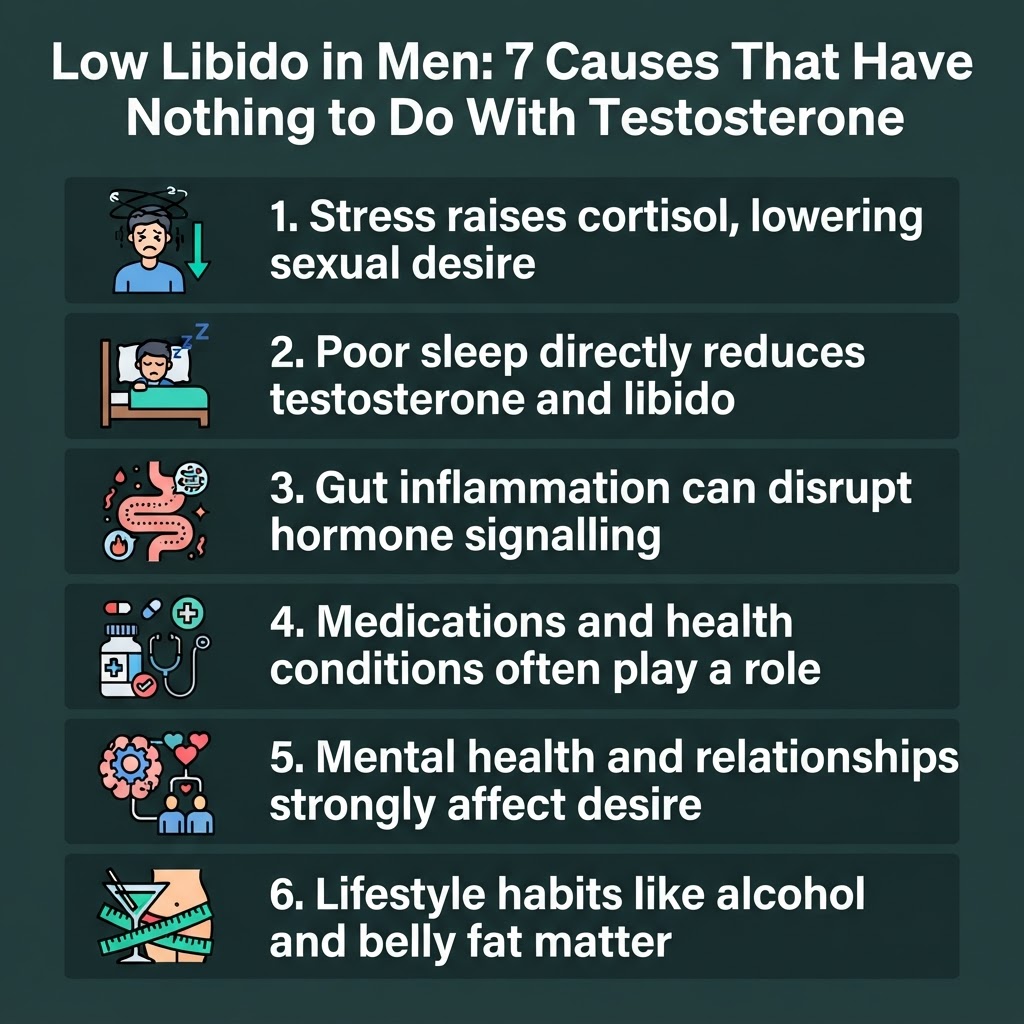
Chronic Stress and the Cortisol Connection
Stress is not just a mental state; it's a hormonal event. When you're under constant pressure, your adrenal glands release cortisol, a stress hormone that helps you deal with short-term threats. The problem is that chronically high cortisol competes with the hormonal pathways that drive sexual desire, effectively turning the volume down on libido.
This is sometimes called the "cortisol steal" effect, where your body prioritises survival hormones over reproductive ones. Men under ongoing work pressure, financial strain, or caregiving stress often notice their interest in sex fading well before any formal hormone test flags a problem. Managing stress isn't a soft recommendation; it's a physiological necessity for a healthy libido.
- Unmanaged work stress raising baseline cortisol levels
- Sleep debt compounding the stress response
- Constant mental multitasking leaving little room for arousal cues
- Stress-related muscle tension affecting comfort during intimacy
Poor Sleep: An Overlooked Libido Killer
Sleep is when your body does its hormonal housekeeping, including the overnight production of testosterone. But even setting hormones aside, poor sleep directly affects desire through fatigue, irritability, and a nervous system that stays stuck in "alert" mode rather than "relaxed" mode.
A well-known study published in JAMA found that restricting healthy young men to five hours of sleep per night for just one week measurably lowered daytime testosterone levels. That's a striking result from something as simple as a short-term sleep schedule. If you want a deeper look at how your nightly rest affects recovery and hormones, our article on how your microbiome affects sleep explains the gut-sleep link in more detail.
"Sleep restriction was associated with a significant decrease in daytime testosterone levels in healthy young men."
— Leproult R, Van Cauter E, JAMA, 2011
Why This Matters Beyond Hormones
Poor sleep also raises cortisol, dulls mood, and reduces the mental bandwidth needed to feel desire in the first place. Fixing sleep is often one of the fastest, most underrated ways to notice a shift in libido within a few weeks.
Your Gut Health May Be Involved Too
It may sound surprising, but your digestive system plays a quiet role in regulating the hormones and inflammation levels tied to sexual desire. Chronic gut issues, bloating, irregular digestion, or a disrupted microbiome (the community of bacteria living in your intestines) can trigger low-grade inflammation that interferes with normal hormone signalling.
We've explored this connection in detail in The Gut-Testosterone Loop, which looks at how daily digestion habits influence hormone production over time. The takeaway for libido is similar: a gut that's constantly inflamed or imbalanced sends stress signals throughout the body, and desire is often one of the first things to fade when the body senses something is "off."
This doesn't mean gut health is the only factor, but it's one that's frequently overlooked in conversations that jump straight to testosterone. Supporting gut balance through diet, fibre, and a quality daily probiotic may help reduce this background inflammatory load over time.
Medications, Health Conditions, and Blood Flow
Several common medications list reduced libido as a side effect, and many men don't connect the dots because the prescription was for something unrelated to sex. Blood pressure medications, antidepressants, and some prostate medications are frequent examples. If you've started a new medication around the same time your desire dropped, that timing is worth mentioning to your doctor rather than dismissing as coincidence.
Underlying health conditions matter too. Poor blood flow from cardiovascular issues, undiagnosed diabetes, or prostate-related changes can all play a role, which is part of why we encourage men to read The Prostate Conversation Nobody Wants to Have—But Should. Frequent nighttime urination, discussed in our guide on waking up to urinate after 50, can also disrupt sleep quality enough to lower desire indirectly.
- Blood pressure medications (beta-blockers in particular)
- Certain antidepressants (SSRIs)
- Undiagnosed or poorly managed diabetes
- Prostate conditions affecting comfort or confidence
Mental Health, Mood, and Relationship Dynamics
Desire doesn't exist in isolation from your emotional life. Depression and anxiety are strongly linked to reduced sexual interest, and this relationship often goes both ways: low mood lowers libido, and a persistently low libido can, in turn, affect self-esteem and mood. The World Health Organization notes that depression affects a significant portion of adults worldwide, making it one of the most common yet under-discussed health issues among men.
"Depression is a common illness worldwide, with more than 280 million people affected."
— World Health Organization, Depression Fact Sheet, 2023
Relationship stress, unresolved conflict, or simply feeling disconnected from a partner can also quietly erode desire, independent of any hormone or medical issue. Many men find it easier to blame a hormone level than to acknowledge relationship strain, but being honest about this factor is often the faster path to real improvement.
Everyday Lifestyle Factors That Quietly Lower Desire
Beyond medical causes, everyday habits add up in ways that are easy to underestimate. Alcohol, while it may lower inhibitions in the short term, is a nervous system depressant that reduces both performance and desire with regular heavy use. Carrying excess abdominal fat is another contributing factor, which we cover in detail in Belly Fat After 40, since fat tissue itself can alter hormone metabolism.
A diet heavy in processed foods and low in whole foods, movement, and sunlight can also leave men feeling generally depleted, and desire tends to be one of the first casualties of low overall energy. None of these factors act alone; they tend to stack on top of each other.
- Regular heavy alcohol intake
- Sedentary days with little physical activity
- Excess abdominal fat affecting hormone balance
- Diets low in whole foods, fibre, and micronutrients
Your Simplest First Step
If you've read this far, you've probably recognised at least one of these factors in your own routine. Rather than trying to fix everything at once, start with the habit that feels most within reach this week, whether that's an earlier bedtime, a short daily walk, or simply paying attention to your gut health. For men looking for extra support across stress, recovery, and hormone balance, our Men's Performance Stack is designed to support these everyday foundations alongside, not instead of, good lifestyle habits.
You can browse the full range of options at the His-Biotics store if you'd like to explore what fits your routine best. And if you'd like future articles like this one sent straight to you, consider subscribing to the His-Biotics newsletter below.