
Most men don't think about their prostate until it interrupts their sleep or their doctor brings it up unprompted. By then, the conversation usually starts with a problem rather than a plan. If you're in your 40s right now, you have something rarer than you realise: a window to act before symptoms show up.
I'm Dr. Chomba Chuma, and in my years treating men through midlife transitions, the pattern is almost always the same. Men wait for a warning sign, then scramble for information. This article is for the man who wants to skip that stage entirely and simply know what to do, starting today.
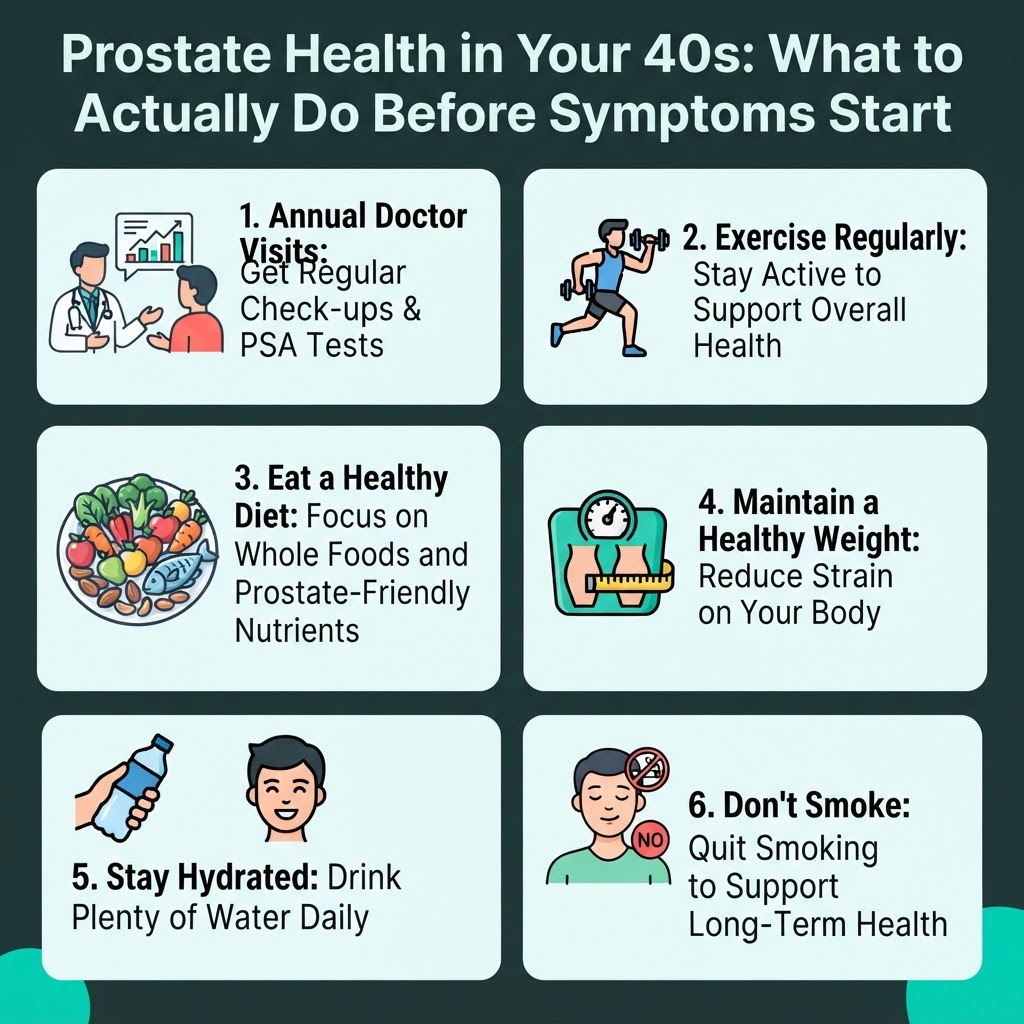
Why Your 40s Are the Real Window for Prostate Health
The prostate is a small gland, roughly the size of a walnut, sitting just below the bladder. Its job is to produce part of the fluid that carries sperm. From your mid-30s onward, it begins a slow, steady process of growth called benign prostatic hyperplasia (BPH) — a non-cancerous enlargement that's extremely common with age.
According to the National Institute of Diabetes and Digestive and Kidney Diseases (NIDDK), BPH affects about half of men by age 60 and even more beyond that. The changes, however, start decades earlier — quietly, with no symptoms at all. That's exactly why your 40s matter more than most men realise.