
If you've ever loosened your belt after a meal that wasn't even that big, you already know the frustration of male bloating. It's not just uncomfortable — it can leave you feeling sluggish, self-conscious, and strangely inflated for hours afterward. As a physician, I hear this complaint constantly from men who've tried cutting carbs, taking antacids, and still feel like they're carrying a water balloon under their shirt.
The good news is that a well-chosen probiotic — a supplement containing live bacteria strains that support your gut's microbial balance — can make a measurable difference for many men. But not every product on the shelf is built for this specific problem. This guide breaks down exactly what the evidence says, what to look for on a label, and why strain selection matters more than marketing claims.
Why Male Bloating Isn't Just "Something You Ate"
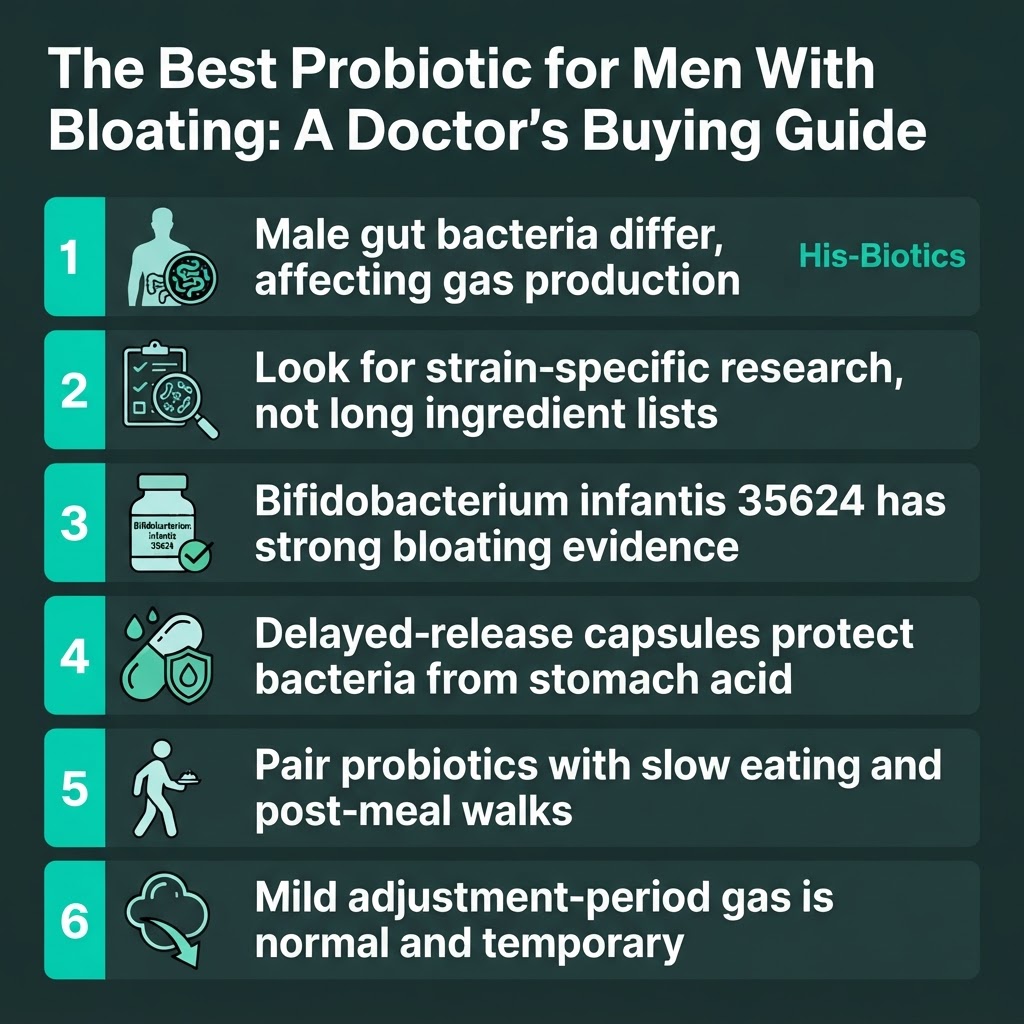
Men's digestive systems aren't simply smaller versions of women's. Research shows the male gut microbiome — the trillions of bacteria living in your intestines — tends to carry different proportions of certain bacterial families, shaped by diet, alcohol intake, and hormone levels. These differences influence how efficiently gas gets produced and cleared during normal digestion, which is a big part of why two people can eat the same meal and only one ends up bloated.
The Male Gut Microbiome Factor
On average, men eat more red meat, drink more alcohol, and consume less fibre than women — a combination that feeds gas-producing bacteria while starving the beneficial ones that keep things moving smoothly. We explored this dynamic in detail in our piece on the gut-testosterone loop, where everyday digestion habits were shown to influence hormone balance almost as much as diet alone. Bloating, in many men, is simply the visible symptom of a deeper microbial imbalance that's been building for months or years.
What's Actually Happening in Your Gut When You Bloat
Before reaching for a bottle of capsules, it helps to understand what's going on beneath the surface. Bloating typically results from one or more of the following mechanisms working together:
- Excess gas production from fermentable carbohydrates breaking down slowly in the gut
- An imbalance between gas-producing bacteria and the species that consume or neutralise that gas
- Slow intestinal transit, which gives bacteria more time to ferment leftover food
- Low-grade gut inflammation linked to processed food, alcohol, or chronic stress
- Stress itself, which alters gut motility through the gut-brain nervous system connection
According to the Mayo Clinic, bloating that persists despite simple dietary changes can sometimes point to an underlying digestive condition, which is why chronic symptoms deserve a proper look rather than more guesswork. Most cases, however, trace back to the everyday mix of diet, bacteria, and stress described above.
What to Look for in a Probiotic for Bloating
Not all probiotics are created equal, and for bloating specifically, certain features matter far more than flashy packaging. Here's what tends to separate a product that might genuinely help from one that's essentially expensive yeast powder.
- Strain-specific research behind the formula, not just a generic "probiotic blend" with vague species names
- A CFU (colony-forming unit) count high enough to survive stomach acid, typically in the 10–20 billion range per serving
- Delayed-release or enteric-coated capsules, so more live bacteria actually reach the intestine instead of dying in stomach acid
- No unnecessary fillers, artificial sweeteners, or added sugar — ingredients that can themselves worsen gas in sensitive men
- Transparent labelling of exact strain names, not just the genus, along with batch testing or third-party quality standards
Red Flags Worth Avoiding
Be cautious of products that boast an enormous number of strains but list no clinical research for any single one of them. We unpack these label details strain by strain in our breakdown of His-Biotics ingredients and strains, which is worth reading if you want to know exactly what you're swallowing each morning rather than trusting a marketing claim on the box.
The Strains With the Best Evidence for Bloating Relief
Clinical research on probiotics and bloating consistently points toward a handful of well-studied strains, rather than probiotics as a broad category. Bifidobacterium infantis 35624 is among the most researched, with a landmark trial in women and men with irritable bowel syndrome finding meaningful improvements in bloating and abdominal discomfort.
"Bifidobacterium infantis 35624 was associated with a significant improvement in abdominal pain, bloating, and bowel movement difficulty compared with placebo."
— Whorwell PJ, et al., American Journal of Gastroenterology, 2006 (PubMed)
Lactobacillus plantarum has shown similar promise in several controlled trials, particularly for reducing gas volume and visible distension after meals. A broader systematic review pooling multiple trials in irritable bowel syndrome found that select strains and combinations consistently outperformed placebo for bloating, although the effect size varied depending on exactly which strain was used.
"Certain probiotics, including specific strains of Bifidobacterium and Lactobacillus, demonstrated a modest but consistent benefit over placebo for global symptoms and bloating in irritable bowel syndrome."
— Ford AC, et al., Alimentary Pharmacology & Therapeutics, 2018 (PubMed)
Why More Strains Isn't Always Better
This research is exactly why I'm cautious about products listing a dozen strains at trace doses. A smaller number of well-dosed, well-researched strains tends to outperform a long ingredient list designed mainly to look impressive on a label. Dose and strain specificity matter more than sheer variety when bloating is the target symptom.
How to Introduce a Probiotic Without Making Bloating Worse First
It's worth knowing that some men experience a brief adjustment period — a few days of mild extra gas — as new bacteria settle into the gut. This is usually temporary and tends to resolve within one to two weeks of consistent use. Starting with food, rather than on an empty stomach, and sticking to the same time daily tends to reduce this initial adjustment.
If bloating noticeably worsens beyond two weeks rather than improving, that's a signal to reassess the specific strains and dose rather than pushing through discomfort. Consistency matters more than intensity here — daily use over several weeks typically outperforms sporadic, high-dose attempts.
Pairing Your Probiotic With Daily Habits
A probiotic works best as part of a routine, not as a standalone fix for years of dietary habits. Men who pair supplementation with a few basic gut-supportive habits tend to see results faster and hold onto them longer.
- Eating slowly and chewing thoroughly, which reduces the amount of air swallowed with each bite
- Limiting carbonated drinks and sugar alcohols often found in "diet" or "sugar-free" products
- Taking a short 10–15 minute walk after meals to support healthy gut motility
- Keeping probiotic timing consistent — same time, same context, every single day
These habits also support broader digestive and hormonal health, a connection we detail further in our guide to daily digestion habits that quietly shape men's hormones.
When Bloating Signals Something More Than Diet
Most occasional bloating is harmless and diet-related, responding well to the strategies above. But persistent bloating accompanied by unexplained weight loss, blood in the stool, or severe pain warrants a proper medical workup rather than another supplement trial. Chronic digestive symptoms are best assessed in the context of your full health history, not treated as an isolated inconvenience.
If you've already adjusted your diet and basic habits without meaningful relief, it's worth reviewing how other men have actually responded before choosing a product. Our article on how to read probiotic reviews like a doctor explains how to separate genuine improvement from placebo effect and marketing noise.
How His-Biotics Original Was Formulated for Men's Digestion
His-Biotics Probiotics ORIGINAL was built specifically around strains with published research relevant to digestive comfort, combined with a multivitamin base that supports everyday energy and recovery. It uses a delayed-release capsule designed to protect live bacteria as they pass through stomach acid, so more of the dose actually reaches the intestine where it can do its work.
For men dealing specifically with bloating, this formulation may help support more comfortable, regular digestion when combined with the consistent daily use and habits described above. It is not a quick fix, and no probiotic can promise to eliminate bloating on its own — but as part of a broader approach to gut health, it may help you feel noticeably less inflated after meals within a few weeks.
"The goal isn't to chase a miracle strain. It's to give your gut a consistent, well-dosed foundation it can actually use, day after day."
— Dr Chomba Chuma, MD, Founder, His-Biotics
Your Next Step
The simplest place to start is a single, well-dosed daily capsule rather than stacking five different supplements at once and hoping something sticks. If you'd like to try the formulation discussed above, you can view His-Biotics Probiotics ORIGINAL directly, or browse the full range at the His-Biotics store to find the option that best matches your goals.
If you'd like practical, doctor-reviewed updates on men's gut and hormonal health sent straight to your inbox, subscribe to the His-Biotics newsletter below.