The Dirty Secret Inside Every Hard Training Block
You've optimised your creatine loading protocol. You've timed your BCAAs to the minute. You've tracked your macros, your sleep, your HRV. But if you're ignoring your gut microbiome, you're leaving a significant performance deficit on the table — one that no amount of supplementation can fully overcome. As a clinician who works specifically with male metabolic and hormonal health, I see this pattern constantly: highly motivated athletes with compromised gut barriers, blunted recovery, and subclinical inflammation that quietly erodes their gains. The culprit is exercise-induced gut permeability — and it is far more common, and far more consequential, than most coaches, trainers, and even physicians appreciate.
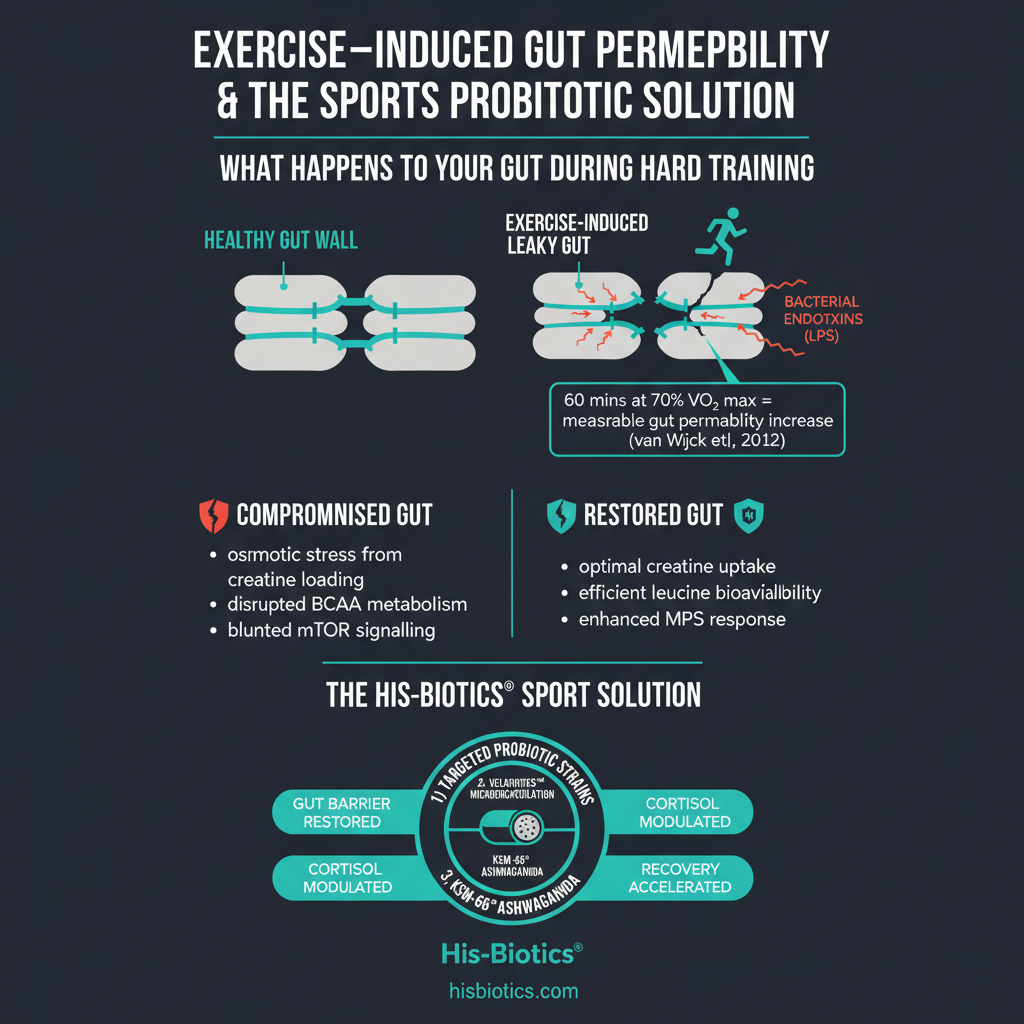
During intense or prolonged physical exertion, blood is shunted away from the gut and redirected toward the working muscles. This phenomenon — known as splanchnic hypoperfusion — reduces oxygen delivery to the intestinal lining, triggering a cascade of cellular stress that loosens the tight junction proteins holding your gut wall together. The result is increased intestinal permeability, colloquially known as leaky gut. Bacterial endotoxins, partially digested food particles, and inflammatory mediators begin to migrate across a barrier that should be keeping them firmly in check. For gut health athletes, this is not a fringe concern — it is a fundamental physiological challenge that deserves a targeted solution.
What makes this particularly insidious is that the very supplements most athletes rely on for performance — creatine, BCAAs, high-protein diets — can interact with a compromised gut in ways that either amplify inflammation or go to waste if absorption is impaired. Understanding this interplay is the cornerstone of what I call performance gut medicine. In this article, I want to walk you through the science, the mechanism, and — critically — what you can actually do about it.
Exercise-Induced Gut Permeability: What the Research Tells Us
The evidence base for exercise-induced intestinal permeability has grown substantially over the past decade. A landmark study published in the Alimentary Pharmacology & Therapeutics journal (2012, van Wijck et al.) demonstrated that as little as 60 minutes of cycling at 70% VO₂ max was sufficient to significantly increase gut permeability markers, specifically urinary lactulose-to-rhamnose ratios, in healthy male athletes. The effect was measurable within hours of exercise cessation and correlated with elevated plasma endotoxin levels — a proxy for bacterial translocation across the gut wall. This is not a theoretical concern. This is happening to your body every time you push hard in the gym or on the track.
A further review published in Nutrients (2020, Mohr et al.) examined the microbiome profiles of elite athletes against sedentary controls and found that while athletes generally demonstrated greater microbial diversity, those engaged in very high training volumes showed signatures of gut dysbiosis and elevated inflammatory cytokines consistent with a compromised intestinal barrier. The irony is profound: the harder you train, the more you stress the very system responsible for nutrient absorption, immune regulation, and — as emerging gut microbiome research increasingly demonstrates — hormonal signalling, including testosterone metabolism.
Perhaps most relevant for male athletes is the relationship between gut integrity and systemic inflammation. When the gut barrier is breached, lipopolysaccharides (LPS) from gram-negative bacteria enter circulation and activate the innate immune system. Chronically elevated LPS has been linked to suppressed Leydig cell function, reduced testosterone biosynthesis, and elevated cortisol — the precise hormonal environment that destroys recovery, muscle protein synthesis, and libido. This is not a peripheral issue. It sits at the very centre of male athletic performance.
How Creatine and BCAAs Interact With a Compromised Gut
Let's talk about the supplements that fill most athletes' shelves, because the relationship between these compounds and gut health is nuanced and frequently misunderstood. Creatine monohydrate remains one of the most evidence-supported ergogenic aids in existence — but creatine gut health interactions are real and worth understanding. In some individuals, particularly those supplementing at higher loading doses (20g/day), creatine can draw significant water into the intestinal lumen via osmotic pressure, contributing to bloating, cramping, and loose stools. In an already-compromised gut, this osmotic stress can exacerbate permeability issues rather than remaining benign. Lower maintenance doses (3–5g/day) alongside a robust microbiome are far better tolerated and may allow for more consistent creatine uptake.
BCAAs — leucine, isoleucine, and valine — are similarly interesting when considered through a gut lens. These amino acids are not only signalling molecules for mTOR-mediated muscle protein synthesis; they are also metabolised by gut bacteria. Research has shown that certain bacterial genera, particularly Lactobacillus species, are involved in BCAA catabolism in the gut, influencing both their bioavailability and the production of secondary metabolites that affect intestinal barrier integrity. When gut dysbiosis is present, BCAA metabolism is disrupted, meaning the leucine you're paying a premium for may be producing less anabolic signal than you expect. The concept of BCAA probiotics — using targeted bacterial strains to optimise BCAA metabolism — is an emerging and genuinely exciting area of sports nutrition science.
What this means practically is that supplementing creatine and BCAAs without addressing the underlying gut environment is, at best, inefficient. You are pouring high-quality fuel into an engine with a cracked intake manifold. Restoring gut barrier integrity and microbial balance is not a luxury add-on to your performance stack — it is the foundational step that makes everything else work properly. This is precisely why athletic performance gut medicine is becoming a discipline in its own right, and why I designed His-Biotics® Sport specifically to address this gap.
Sports Probiotics: Strain Specificity, Mechanisms, and What Actually Works
Not all probiotics are created equal, and this is never more true than in the context of athletic performance. The term sports probiotics refers to specific bacterial strains — and increasingly, precisely dosed combinations — that have been clinically evaluated for their effects on gut permeability, immune modulation, and recovery in exercising populations. Generic supermarket probiotics with undisclosed CFU counts and no strain specificity are not what we are talking about here. Performance probiotics require a fundamentally different standard of evidence and formulation science.
Strains That Move the Needle
The evidence for specific strains in athletic contexts is growing rapidly. Lactobacillus plantarum PS128 has demonstrated effects on mood, stress resilience, and cortisol regulation via the gut-brain axis — directly relevant to training adaptation. Lactobacillus acidophilus and Bifidobacterium longum have been shown to strengthen tight junction expression, directly addressing the exercise-induced permeability problem described above. A 2019 study published in the Journal of the International Society of Sports Nutrition (Jäger et al.) found that multi-strain probiotic supplementation significantly reduced upper respiratory tract infections in athletes — a well-established consequence of overtraining and gut immune compromise — and improved gut comfort during high-intensity training blocks. You can explore the broader landscape of PubMed research on probiotics and hormonal health to understand just how deep this rabbit hole goes.
The Delivery Problem — and How We Solved It
One of the most frustrating realities in probiotic science is that CFU counts on labels are largely meaningless if the bacteria don't survive the journey through your stomach acid to reach the colon alive. This is where Velobiotics™ microencapsulation technology becomes a genuine game-changer. Rather than relying on standard enteric-coated capsules that offer inconsistent protection, our microencapsulation process surrounds each bacterial colony in a precision-engineered lipid matrix, providing multi-stage acid and bile resistance while enabling timed release at the optimal point in the gastrointestinal tract. Clinical viability testing shows survival rates significantly above the industry standard, meaning the strains you read on the label are actually arriving at their destination — and actually doing their job.
Adaptogens as Synergists
His-Biotics® Sport doesn't stop at the gut wall. Recognising that exercise-induced permeability is fundamentally a stress response, the formula incorporates KSM-66® Ashwagandha — the most clinically validated form of Withania somnifera on the market. The clinical studies on KSM-66® Ashwagandha include randomised controlled trials demonstrating reductions in cortisol, improvements in VO₂ max, and enhanced recovery in resistance-trained males. By combining targeted probiotic strains with an adaptogen that directly modulates the HPA axis stress response, we address exercise-induced gut stress from two directions simultaneously — microbial restoration and neuroendocrine regulation.
Building a Recovery Ecosystem: The Gut-First Approach
I want to challenge a deeply embedded assumption in sports nutrition: the idea that recovery is primarily a substrate problem. Feed the muscle. Replenish glycogen. Deliver amino acids. This framework is not wrong, but it is profoundly incomplete. Recovery is fundamentally a systemic biological event involving immune modulation, hormonal rebalancing, tissue repair signalling, and — critically — the restoration of gut barrier integrity after training-induced stress. Without addressing that last variable, the other interventions are operating at a fraction of their potential.
Here is what an evidence-informed, gut-first recovery protocol looks like in practice. The timing of exercise recovery probiotics matters: evidence suggests that consuming probiotic strains alongside post-workout nutrition enhances their colonisation potential, as the post-exercise gut environment — warm, well-perfused after the acute hypoperfusion resolves, and receiving a nutrient stimulus — is particularly receptive. Combining probiotics with prebiotic fibres (inulin, FOS, resistant starch) dramatically enhances the colonisation and proliferative success of introduced strains. Hydration is also a gut health intervention: even mild dehydration exacerbates intestinal permeability during exercise.
Practical Nutrition Strategies to Protect the Gut Wall
- Reduce NSAID use: Non-steroidal anti-inflammatory drugs are catastrophic for gut integrity. A single dose of ibuprofen can measurably increase intestinal permeability — avoid these before or during training blocks where possible.
- Prioritise whole food carbohydrates over ultra-processed sports foods: Gels, bars, and chews used during endurance events can contribute to gut dysbiosis with repeated use. Use real food where training intensity allows.
- Don't train fasted for high-intensity sessions: Fasted high-intensity training amplifies splanchnic hypoperfusion and increases gut permeability more than fed-state training. Save fasted protocols for low-moderate intensity work.
- Eat fermented foods daily: Kefir, sauerkraut, kimchi, and natural yoghurt provide live cultures and short-chain fatty acids (SCFAs) that directly fuel colonocytes — the cells that maintain gut wall integrity.
- Manage training load intelligently: Gut permeability increases non-linearly with training intensity and duration. Build in recovery weeks. The gut, like your muscles, needs structured deload periods.
Key Takeaways
Before pointing you toward the next step, let me crystallise the core science from this article into the points that matter most for your training and recovery:
- Exercise-induced gut permeability is real and measurable: High-intensity training reliably increases intestinal leakiness within hours, elevating circulating endotoxins and triggering systemic inflammation that directly impairs recovery and hormonal health.
- Creatine and BCAAs interact with your gut environment: These supplements perform best when gut integrity and microbiome composition are optimised — a compromised gut blunts their efficacy and can worsen GI symptoms.
- Strain specificity matters enormously in sports probiotics: Only validated strains with demonstrated mechanisms in exercising populations should be considered. Generic probiotics are not a substitute for targeted performance formulations.
- Velobiotics™ microencapsulation ensures survivability: Without guaranteed delivery of live bacterial colonies to the colon, even excellent probiotic formulations fail at the most basic level. Delivery technology is non-negotiable.
- Adaptogens and probiotics are synergistic in athletic contexts: Combining gut-targeted strains with HPA-axis modulators like KSM-66® Ashwagandha addresses the exercise stress response from both ends — microbial and neuroendocrine.
- Recovery is a gut-first event: Optimising intestinal barrier integrity and microbiome composition is the foundational intervention that determines how effectively every other recovery input — nutrition, sleep, supplementation — actually works.
If this article has shifted how you think about the relationship between your gut and your gains, I encourage you to explore the full science behind what we've built at Velobiotics™. Explore our athlete formula and discover how each component of our sports range was selected specifically for men who train hard and demand more from their biology. If you'd like a more personalised starting point, the Morning Man Protocol is a great entry point for understanding your individual hormonal and gut health baseline before building your stack. And if you're ready to address exercise-induced gut permeability head-on with a clinically grounded, delivery-optimised formulation, His-Biotics® Sport was built precisely for you. Your gut is not a passenger in your performance — it is the engine. Train it accordingly.
— Dr. Chomba Chuma, MD & Founder, His-Biotics® by Velobiotics™