The Hidden Cost of Hard Training: Exercise-Induced Gut Permeability
Every serious athlete understands the concept of breaking the body down to build it back stronger. We accept muscle soreness, elevated cortisol, and temporary immune suppression as the price of progress. What most athletes — even elite ones — fail to account for is what happens to the gut wall during intense exercise. Exercise-induced gut permeability, sometimes called exercise-induced leaky gut, is one of the most underappreciated barriers to athletic performance and recovery, and the science behind it is both compelling and actionable.
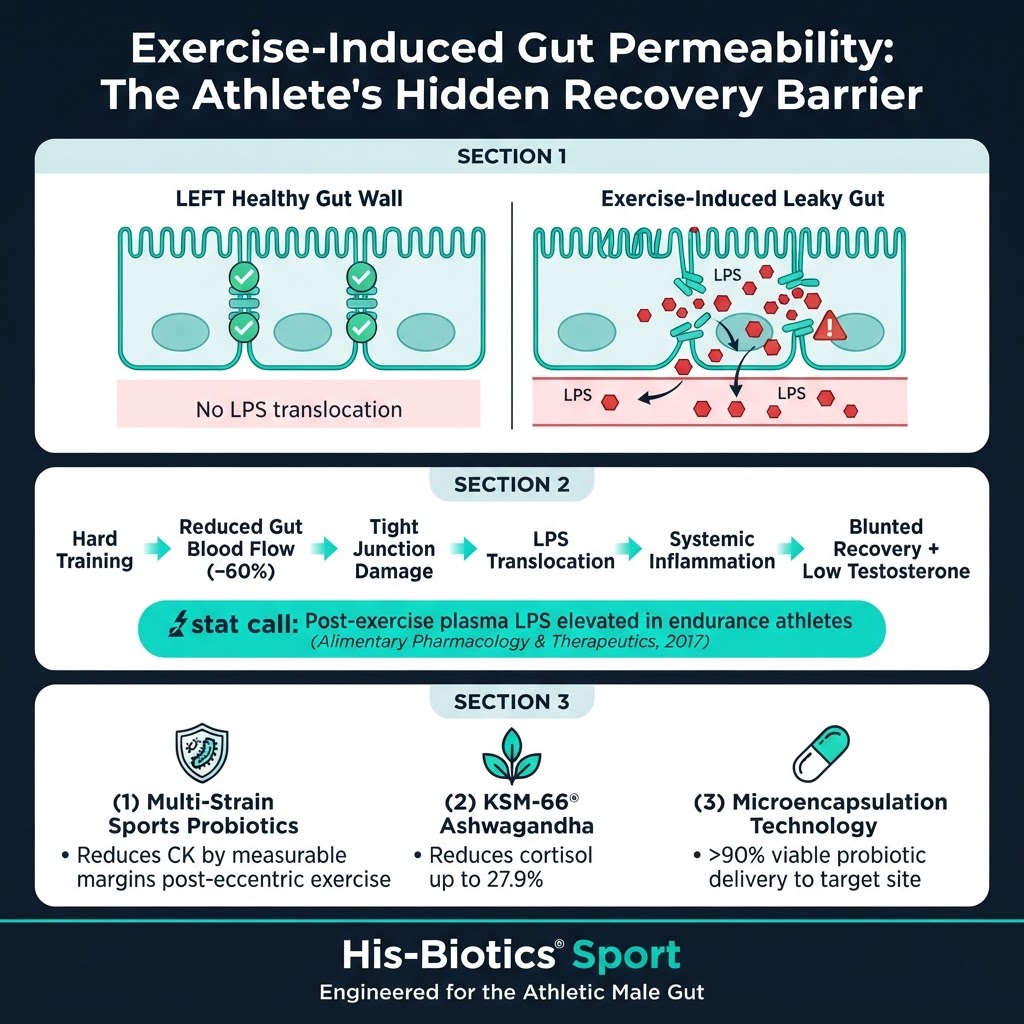
During high-intensity or prolonged exercise, blood is preferentially redirected to working muscles, the heart, and the lungs. The gastrointestinal tract, in contrast, experiences significant ischaemia — a reduction in blood flow that can fall by as much as 60–80% during maximal exertion. This ischaemia causes direct damage to the tight junction proteins that hold gut epithelial cells together. The result is increased intestinal permeability: bacterial endotoxins, undigested food particles, and lipopolysaccharides (LPS) begin to translocate across the gut wall and into systemic circulation. A landmark study published in the Alimentary Pharmacology & Therapeutics journal (2017) demonstrated that endurance athletes showed measurably elevated plasma LPS and intestinal fatty acid-binding protein (I-FABP) — a biomarker of gut epithelial damage — immediately following prolonged exercise. This is not a theoretical concern; it is a measurable physiological event happening to your gut every time you push hard.
The downstream consequences of this gut disruption are wide-ranging. Systemic LPS translocation triggers a low-grade inflammatory cascade that competes directly with anabolic recovery signalling. Elevated circulating endotoxins have been associated with increased fatigue, impaired muscle protein synthesis, blunted testosterone response, and prolonged recovery times. For the gut health athlete, this creates a paradox: the very training that drives adaptation is simultaneously undermining the hormonal and inflammatory environment needed to capitalise on that adaptation. Understanding this mechanism is the first step to addressing it strategically.
How Your Microbiome Determines Your Recovery Ceiling
The gut microbiome is not a passive bystander in athletic performance — it is an active participant. The trillions of microorganisms residing in your gastrointestinal tract influence everything from nutrient absorption efficiency to neurotransmitter production to the regulation of systemic inflammation. Cutting-edge gut microbiome research has consistently shown that high-performing athletes harbour distinct microbial profiles compared to sedentary individuals, characterised by greater diversity, higher abundances of butyrate-producing species like Faecalibacterium prausnitzii, and enriched populations of Veillonella atypica — a bacterium that converts exercise-derived lactate into propionate, a short-chain fatty acid that directly fuels muscle endurance.
Butyrate, the metabolic product of fibre fermentation by beneficial gut bacteria, is particularly critical for athletic performance and gut integrity. Butyrate is the primary fuel source for colonocytes — the cells lining your colon — and plays a central role in maintaining tight junction protein expression, essentially acting as the molecular mortar that keeps your gut wall sealed. When microbiome diversity collapses under the stress of overtraining, inadequate sleep, or poor dietary habits, butyrate production falls, tight junction integrity degrades, and the leaky gut cycle accelerates. This is why two athletes following the same training programme can have vastly different recovery trajectories: their microbiomes are operating at different functional capacities.
The relationship between the microbiome and testosterone is equally significant for male athletes specifically. Emerging PubMed research on probiotics and testosterone regulation suggests that gut bacteria influence androgen metabolism through the enterohepatic circulation of sex hormones and through modulation of cortisol — the catabolic hormone that directly antagonises testosterone. A dysbiotic gut not only leaks more but also impairs the hormonal recovery environment that male athletes depend on for muscle repair, libido, and drive. Addressing the microbiome is therefore not ancillary to performance — it is performance medicine.
Creatine, BCAAs, and Your Gut: What the Labels Don't Tell You
Creatine and branched-chain amino acids (BCAAs) are among the most widely used supplements in athletic performance, and for good reason — the evidence base supporting their roles in power output, muscle protein synthesis, and anti-catabolism is robust. However, the interaction between these supplements and gut health is a conversation that rarely makes it onto product labels, and it is one that directly impacts whether athletes are getting the results they are paying for.
Creatine gut health is a topic that deserves far more clinical attention. Creatine monohydrate at standard loading doses (20g/day) is well-documented to cause gastrointestinal distress in a significant proportion of users — bloating, cramping, and loose stools that are often dismissed as transient side effects. The mechanism is partly osmotic: unabsorbed creatine draws water into the intestinal lumen. But there is a less-discussed dimension. A compromised gut lining with reduced absorptive surface area absorbs creatine less efficiently, meaning athletes with exercise-induced gut permeability may be getting significantly less creatine into muscle tissue while experiencing disproportionate GI side effects. Supporting gut epithelial integrity is therefore a prerequisite for optimal creatine utilisation — not an optional add-on.
The picture with BCAA probiotics interactions is similarly nuanced. BCAAs — leucine, isoleucine, and valine — are absorbed primarily in the small intestine via specific amino acid transporters. In a gut with compromised tight junctions and elevated inflammatory tone, transporter expression and activity are downregulated, reducing net BCAA absorption. Furthermore, excess BCAAs reaching the colon can shift microbial metabolism towards proteolytic fermentation, generating ammonia and other toxic metabolites that further stress the gut environment. The practical implication is clear: optimising gut microbiome health before and alongside BCAA supplementation is not just about comfort — it is about ensuring your investment in nutrition actually reaches the tissue that needs it.
Key Supplement-Gut Interactions to Understand
- Creatine loading without gut support increases osmotic load and may worsen GI permeability in athletes already under training stress
- BCAAs in a dysbiotic gut face impaired transporter expression, reducing muscular uptake and potentially feeding proteolytic bacteria
- Protein powders at high doses can shift the microbiome towards pro-inflammatory profiles if fibre and probiotic intake are insufficient
- NSAIDs taken for recovery further compromise tight junction integrity, compounding exercise-induced gut permeability
- Inadequate carbohydrate intake during endurance events starves beneficial butyrate-producing bacteria, accelerating microbiome collapse under stress
Sports Probiotics: The Science Behind Strain-Specific Athletic Benefits
Not all probiotics are created equal, and the distinction matters enormously when you are selecting strains for athletic performance rather than general digestive wellness. Sports probiotics is an emerging clinical category characterised by strains selected for their ability to reduce exercise-induced gut permeability, modulate post-exercise inflammation, enhance nutrient absorption, and support the immune system under training stress. The research in this area has accelerated significantly over the past decade, and the findings are moving from promising to compelling.
A randomised controlled trial published in the Journal of the International Society of Sports Nutrition (2019) examined the effects of Lactobacillus acidophilus and Bifidobacterium longum supplementation in endurance athletes over 12 weeks. The probiotic group showed significantly reduced markers of intestinal permeability (measured by lactulose:mannitol ratio), lower post-exercise plasma LPS, and improved scores on subjective fatigue and recovery questionnaires compared to placebo. Crucially, the benefits were dose-dependent and took approximately four weeks to manifest, underscoring that probiotic supplementation for athletic purposes requires both the right strains and sufficient time to colonise and exert systemic effects.
A second study worth highlighting, published in Frontiers in Physiology (2020), found that multi-strain probiotic supplementation in male strength athletes led to a significant reduction in creatine kinase (CK) — a key biomarker of muscle damage — in the 48 hours following an eccentric exercise protocol. The proposed mechanism involved reduced gut-derived LPS translocation, which attenuated the systemic inflammatory response to muscle microtrauma. Less systemic inflammation means faster resolution of the acute damage phase, which translates directly to faster return-to-performance. These findings align precisely with the clinical rationale behind His-Biotics® Sport, which has been formulated around this specific mechanism of action.
What to Look for in an Athletic Probiotic Formula
- Clinically validated strains — Lactobacillus rhamnosus GG, L. acidophilus NCFM, B. longum BB536, and L. plantarum 299v have the strongest evidence base for gut barrier and recovery outcomes
- Sufficient CFU count — therapeutic doses in the athletic research literature typically range from 10–50 billion CFU per day; less than this is unlikely to produce measurable physiological effects
- Survivability technology — the majority of standard probiotics are destroyed by gastric acid before reaching the colon; microencapsulation or acid-resistant delivery is non-negotiable
- Prebiotic synergy — combining probiotics with fermentable fibres (prebiotics) dramatically improves colonisation rates and butyrate production
- Strain diversity — a multi-strain formula targeting both Lactobacillus and Bifidobacterium genera provides broader functional coverage across the small and large intestine
His-Biotics® Sport: Engineered for the Athletic Male Gut
His-Biotics® Sport was developed specifically in response to the clinical gap I kept encountering in practice: male athletes presenting with plateaued performance, slow recovery, and subclinical gut symptoms — yet receiving no targeted microbiome support from their nutritional protocols. The formula integrates a curated multi-strain probiotic matrix with complementary ingredients chosen for their synergistic impact on the exercise-recovery cycle, the gut-hormone axis, and the specific physiological demands of the trained male body.
Central to the formula's efficacy is Velobiotics™ proprietary microencapsulation technology, which encases each probiotic strain in a pH-resistant matrix that protects bacterial viability through the acidic environment of the stomach and delivers live, active cultures to the small intestine and colon where they are needed. Independent stability testing demonstrates greater than 90% viable cell delivery to the target site — a figure that stands in stark contrast to the majority of commercially available probiotics that lose 60–90% of their CFU before reaching the gut. This is not a minor technical footnote; it is the difference between a supplement that works and one that merely passes through.
His-Biotics® Sport also incorporates KSM-66® Ashwagandha, the most clinically studied form of this adaptogen, whose evidence base you can review via the independent clinical studies on KSM-66® Ashwagandha. The inclusion of this ingredient is deliberate and mechanistically grounded: KSM-66® has been shown in double-blind RCTs to reduce serum cortisol by up to 27.9%, which directly attenuates one of the primary drivers of gut barrier disruption in overtrained athletes. Lower cortisol means improved tight junction integrity, better testosterone-to-cortisol ratios, and faster return to anabolic dominance post-training. This is integrative performance medicine — not wellness marketing.
For athletes who want to understand how His-Biotics® Sport fits within a broader daily protocol, I recommend reviewing the Morning Man Protocol, which outlines how to stack gut health, hormonal support, and performance nutrition across the day for compounding results. The synergy between morning cortisol management, probiotic colonisation windows, and pre/post-training nutrition timing is where significant gains are often left on the table.
Key Takeaways
- Exercise-induced gut permeability is real and measurable — intense training reduces splanchnic blood flow, damages tight junction proteins, and allows bacterial endotoxins to enter systemic circulation, blunting recovery and hormonal response
- Your microbiome is a performance variable — butyrate-producing bacteria maintain gut barrier integrity, modulate inflammation, and influence testosterone metabolism; microbiome diversity is as trainable and as losable as fitness itself
- Creatine and BCAA efficacy depends on gut integrity — a leaky, inflamed gut absorbs these key supplements less efficiently, meaning athletes with poor gut health are getting a fraction of the benefit they expect from their nutrition investment
- Strain selection matters enormously in sports probiotics — validated strains at therapeutic doses, delivered via survivability technology, reduce post-exercise CK, lower gut-derived LPS, and accelerate return-to-performance
- KSM-66® Ashwagandha and probiotics work synergistically — reducing cortisol while restoring gut barrier function addresses both ends of the exercise recovery equation simultaneously
- Consistency and delivery technology determine outcomes — Velobiotics™ microencapsulation ensures probiotic viability at the target site; four or more weeks of consistent use is required to see measurable physiological benefit
If you are training hard and not recovering as fast as your effort warrants, your gut may be the missing variable. The research is unambiguous: exercise recovery probiotics formulated for the specific demands of the athletic male gut represent one of the highest-leverage interventions available. I designed His-Biotics® Sport to fill that gap with clinical precision. To learn more about the full formula and how it fits your training goals, explore our athlete formula or go directly to the His-Biotics® Sport product page. Your recovery ceiling is higher than you think — your gut just needs the right support to reach it.
— Dr. Chomba Chuma, MD & Founder, His-Biotics® by Velobiotics™