The Hidden Cost of Hard Training: Your Gut Under Fire
Every serious athlete knows the feeling — you've trained hard, eaten well, and still feel flat, bloated, or slow to recover. Most coaches will point to sleep, nutrition, or programming. But there is a vastly underappreciated variable that sits at the centre of athletic recovery, hormonal regulation, and even muscle protein synthesis: the health of your gut lining. As a clinician who has worked with competitive athletes for over a decade, I can tell you that exercise-induced gut permeability — commonly referred to as "leaky gut" — is one of the most overlooked performance limiters in sport today. Understanding this phenomenon, and knowing how to counter it, could be the edge that separates a plateau from a personal best.
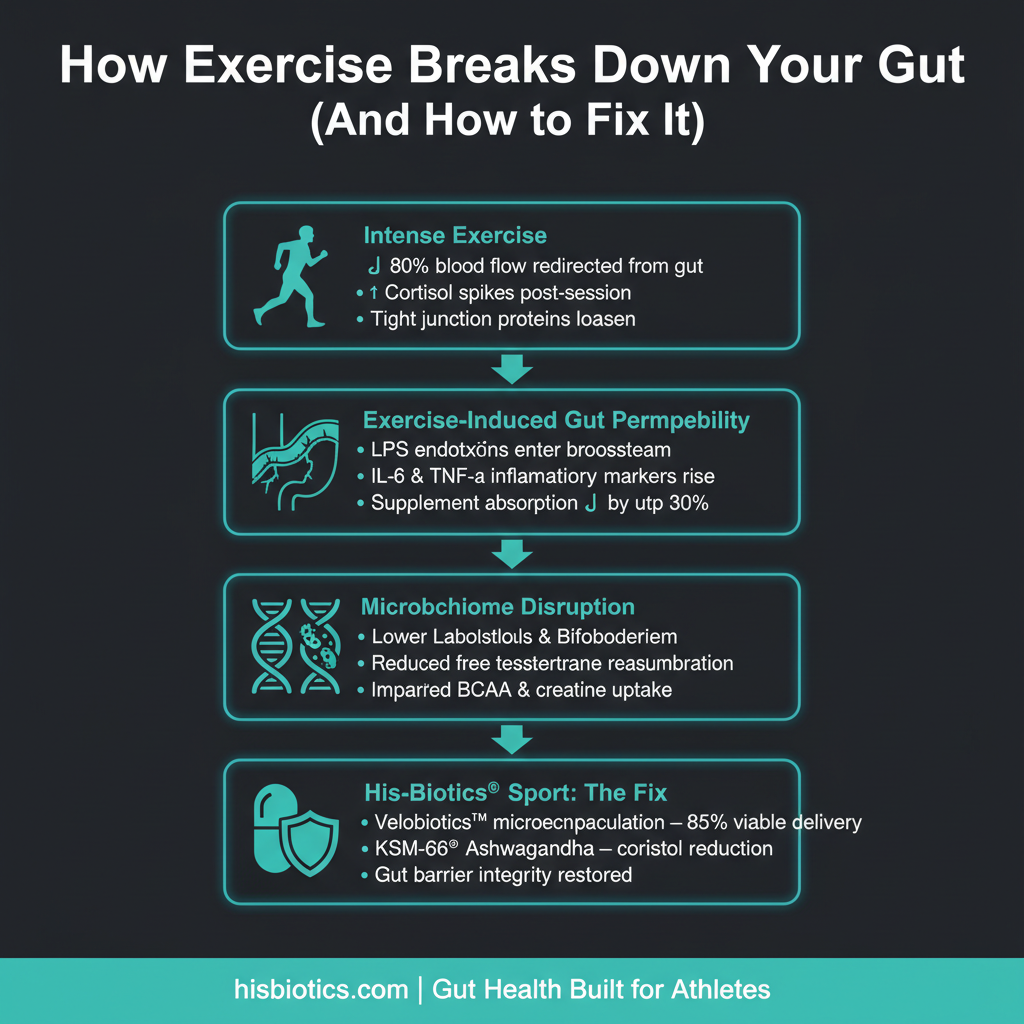
When you push your body through intense exercise, particularly prolonged endurance training or high-volume resistance work, blood flow is dramatically redirected away from the gastrointestinal tract and toward the working muscles. This transient ischaemia — a temporary reduction in gut blood supply — triggers a cascade of inflammatory events at the intestinal epithelium. The tight junction proteins that normally seal the spaces between intestinal cells begin to loosen, allowing bacterial endotoxins, undigested food particles, and inflammatory compounds to translocate into systemic circulation. The result is a state of increased intestinal permeability that can persist for hours after training ends. For gut health athletes, this is not a minor inconvenience — it is a direct threat to recovery, hormonal balance, and long-term performance.
A landmark study published in the American Journal of Physiology – Gastrointestinal and Liver Physiology (2012) by Zuhl et al. demonstrated that endurance exercise at 80% VO₂max for 60 minutes significantly elevated markers of intestinal permeability, including lactulose-to-mannitol ratio and circulating endotoxin levels. Crucially, systemic inflammation — measured via IL-6 and TNF-α — rose in parallel, indicating that what happens in the gut does not stay in the gut. For athletes taking creatine or BCAAs to enhance performance, this matters enormously, because gut permeability directly affects how efficiently those compounds are absorbed and utilised.
Creatine, BCAAs, and the Gut: A Relationship Nobody Talks About
Creatine monohydrate is the most evidence-backed ergogenic aid in sports science, and branched-chain amino acids (BCAAs — leucine, isoleucine, and valine) are a staple of recovery nutrition for athletes worldwide. But here's what the supplement industry rarely tells you: the effectiveness of both compounds is intimately tied to creatine gut health and the absorptive capacity of your small intestine. When the gut lining is compromised by exercise-induced permeability, the active transport mechanisms responsible for creatine uptake — primarily the SLC6A8 creatine transporter — function suboptimally, reducing cellular loading efficiency. Similarly, BCAA absorption relies on intact brush border enzyme activity and healthy enterocyte function, both of which are impaired in a leaky gut state.
There is a further complication with creatine specifically. A subset of athletes experience gastrointestinal discomfort — cramping, bloating, and loose stools — when supplementing with creatine, particularly during loading phases. This is not simply a matter of osmotic load; it is frequently a sign of an already-compromised gut microbiome that lacks the bacterial diversity to buffer the osmotic and pH changes that high-dose creatine creates in the intestinal environment. Research published in the Journal of the International Society of Sports Nutrition (2021) found that gut microbiota composition significantly influenced creatine metabolism, with certain bacterial genera — particularly Lactobacillus and Bifidobacterium species — playing a direct role in modulating the intestinal environment during supplementation. The practical implication is clear: optimise the microbiome, and you optimise your return on every supplement you take.
The relationship between BCAA probiotics co-administration and recovery outcomes is equally compelling. A 2019 study in Nutrients by Jäger et al. reviewed the interaction between probiotic supplementation and protein metabolism in athletes, finding that specific Lactobacillus strains enhanced the bioavailability of amino acids by improving intestinal barrier integrity and upregulating peptide transporter expression (PEPT1). In practical terms, athletes who supported their gut microbiome with targeted probiotics extracted more muscle-building signal from the same dose of BCAAs than those who did not. This is the kind of marginal gain that compounds across weeks and months of training. It also means that if you are investing in quality amino acids, creatine, or protein powders but neglecting your gut, you are quite literally leaving performance on the table.
What the Science Says About Sports Probiotics and Recovery
The field of sports probiotics has matured considerably over the past decade, moving well beyond generic digestive health claims into genuinely mechanistic, performance-relevant science. The emerging picture from gut microbiome research is that the athlete's microbiome is a distinct ecosystem — shaped by training load, nutrition, and recovery habits — and that targeted probiotic intervention can meaningfully shift both recovery kinetics and inflammatory burden. For male athletes specifically, there is an additional dimension: the gut microbiome plays a direct role in testosterone metabolism, oestrogen recycling via the estrobolome, and cortisol regulation, all of which are acutely relevant to training adaptation and body composition.
The evidence for exercise recovery probiotics is building rapidly. A randomised controlled trial published in the British Journal of Sports Medicine (2019) by West et al. demonstrated that Lactobacillus fermentum supplementation over 11 weeks in male endurance athletes significantly reduced the incidence and duration of upper respiratory tract infections — a well-known marker of post-exercise immunosuppression — while also improving self-reported energy levels and recovery quality. The proposed mechanism involves the gut-immune axis: by reinforcing tight junction integrity and stimulating secretory IgA production at the mucosal surface, specific probiotic strains blunt the post-exercise immune dip that leaves athletes vulnerable to illness and prolonged fatigue. This is not a minor outcome — an athlete who trains through a cold loses weeks of quality adaptation.
Beyond immune resilience, athletic performance gut research has linked microbiome diversity to VO₂max, lactate clearance, and even muscle glycogen resynthesis rates. A fascinating 2019 study in Nature Medicine by Scheiman et al. identified that elite marathon runners possessed elevated levels of Veillonella atypica, a bacterium capable of converting exercise-derived lactate into propionate — a short-chain fatty acid that directly fuels muscle contraction and reduces fatigue perception. While we are still learning the full landscape of the performance microbiome, the direction of travel is unambiguous: a well-nourished, diverse gut microbiome is a performance asset. And you can find a growing body of supporting clinical data by browsing PubMed research on probiotics in sport and hormonal health.
The Male Gut Microbiome: Hormones, Stress, and the Training Load Equation
Male physiology adds a layer of complexity to the exercise-gut relationship that is often glossed over in generic sports nutrition advice. Testosterone is not simply produced in the testes and released into circulation — it is modulated, conjugated, and recycled through the gut. The gut microbiome produces beta-glucuronidase enzymes that deconjugate testosterone metabolites in the intestinal lumen, allowing them to be reabsorbed rather than excreted. A dysbiotic microbiome — one characterised by low diversity, overgrowth of pathobionts, and degraded barrier function — reduces this reabsorption efficiency, contributing to lower free testosterone levels even in men who are training hard and eating well. This is a physiological reality that the conventional sports medicine world is only beginning to take seriously.
Cortisol presents a parallel challenge. Intense training chronically elevates cortisol, which directly suppresses tight junction protein expression in the gut epithelium — specifically occludin and claudin-1 — making the gut more permeable with every hard session. This creates a vicious cycle: heavy training → elevated cortisol → increased gut permeability → systemic endotoxaemia → amplified inflammatory response → impaired recovery → elevated cortisol. Breaking this cycle requires a multi-pronged approach, and probiotics are a critical lever. Adaptogenic support also matters significantly here; the clinical studies on KSM-66® Ashwagandha demonstrate significant cortisol-lowering effects that complement probiotic gut barrier support — which is precisely why His-Biotics® Sport incorporates both vectors of intervention.
For male athletes training five or more days per week, the cumulative burden of exercise-induced permeability is substantial. Each bout of high-intensity exercise generates an acute spike in intestinal permeability that may take 24–48 hours to fully resolve. If the next training session begins before the gut lining has recovered, you are layering permeability event upon permeability event. Over weeks and months, this manifests as chronic low-grade endotoxaemia — characterised by elevated LPS (lipopolysaccharide) in circulation, systemic fatigue, impaired nitrogen balance, and blunted anabolic signalling. This is the physiological substrate of overtraining syndrome, and it starts in the gut. Addressing it proactively, rather than waiting for symptoms to become undeniable, is the hallmark of elite-level self-management.
His-Biotics® Sport: A Formula Built for the Athlete's Microbiome
His-Biotics® Sport was developed specifically in response to the gap between what generic probiotics offer and what the physiology of a training male athlete actually demands. Standard off-the-shelf probiotics are formulated for general digestive health — they contain reasonable colony-forming unit (CFU) counts but often rely on strains that are poorly suited to the specific challenges of the athletic gut: high-intensity exercise, creatine and protein supplementation, elevated cortisol, and repeated episodes of exercise-induced permeability. His-Biotics® Sport is different by design.
The formula centres on a clinically validated multi-strain complex featuring Lactobacillus acidophilus NCFM®, Lactobacillus fermentum PCC®, and Bifidobacterium longum Rosell®-175 — strains selected for their demonstrated activity in athletic populations, including gut barrier reinforcement, immune modulation, and amino acid bioavailability enhancement. These are delivered using Velobiotics™ microencapsulation technology, a proprietary process that encases each bacterial cell in a protective lipid matrix, shielding it from gastric acid and bile salts to ensure a minimum of 85% viable delivery to the distal small intestine and colon — precisely where the action needs to happen. This is a critical engineering distinction; a probiotic that is destroyed in the stomach is little more than an expensive capsule.
His-Biotics® Sport also incorporates prebiotic substrate support — specifically inulin-type fructooligosaccharides (FOS) — to feed the probiotic strains upon arrival and promote colonisation efficiency. The addition of KSM-66® Ashwagandha targets the cortisol-gut permeability axis described earlier, while a synergistic vitamin D3 inclusion addresses the commonly observed deficiency in indoor athletes and those training in northern latitudes — a deficiency that independently compromises gut barrier integrity. This is not a stack of ingredients thrown together for label appeal; every component has a mechanistic rationale grounded in the specific physiology of the male athlete. If you want to understand the full rationale behind the formulation, I encourage you to explore our athlete formula in detail.
Practical Strategies for Protecting Gut Health During Heavy Training
Probiotic supplementation is the cornerstone, but it works best within a broader strategy for managing exercise-induced gut permeability. The following evidence-informed practices, when combined with targeted probiotic support, create a compounding protective effect on the gut barrier. These are the recommendations I give to the athletes I work with clinically, and they are built into the framework of our Morning Man Protocol.
Pre-Training Gut Protection
- Train fed, not fasted, for high-intensity sessions: Fasted training dramatically amplifies exercise-induced gut permeability. A small carbohydrate meal 90 minutes before intense work maintains splanchnic blood flow and reduces epithelial stress.
- Hydrate strategically: Dehydration compounds gut ischaemia during exercise. Target 500ml of fluid in the two hours before training, with electrolyte inclusion for sessions exceeding 60 minutes.
- Take His-Biotics® Sport with your morning meal: Consistent daily timing maximises colonisation. Morning administration with food buffers gastric acid exposure, even with microencapsulation protection in place.
- Limit NSAIDs before training: Non-steroidal anti-inflammatory drugs independently increase gut permeability and disrupt the mucosal surface. Habitual pre-training ibuprofen use is a clinical red flag I see regularly in endurance athletes.
Post-Training Recovery Priorities
- Consume fermentable fibre daily: Inulin, pectin, and resistant starch from whole food sources feed the commensal bacteria that maintain tight junction integrity. Aim for 25–35g total dietary fibre per day.
- Prioritise sleep over additional training: The gut lining regenerates most rapidly during deep sleep. Consistently truncating sleep to squeeze in extra sessions accelerates the degradation of barrier integrity.
- Stack creatine with your probiotic: Co-administration of creatine monohydrate (3–5g daily maintenance dose) with a gut-supportive probiotic formula has been shown to reduce GI side effects and improve creatine retention in the intestinal lumen.
- Moderate alcohol intake: Even moderate alcohol consumption (2–3 standard drinks) significantly increases gut permeability and suppresses mucosal immune function for up to 24 hours — a window that overlaps directly with recovery physiology.
- Include collagen peptides or bone broth: Glycine and proline — abundant in collagen — are primary substrates for tight junction protein synthesis and provide direct structural support to the gut epithelium.
Key Takeaways
The relationship between exercise, gut health, and athletic performance is more tightly coupled than most athletes — and many clinicians — appreciate. Whether you are a recreational gym-goer or a competitive endurance athlete, protecting your gut barrier is as fundamental to your performance as your training programme itself. Here is what I want you to leave with:
- Exercise-induced gut permeability is real and measurable: Intense training causes a transient but significant increase in intestinal permeability, with systemic inflammatory consequences that directly impair recovery and adaptation.
- Your gut microbiome determines how well your supplements work: Creatine absorption, BCAA bioavailability, and protein synthesis signalling are all modulated by the health and diversity of the gut microbiome.
- Specific probiotic strains — not generic products — make the difference: Strains with clinical evidence in athletic populations, delivered with high-viability technology like Velobiotics™ microencapsulation, are the standard to insist upon.
- The male gut-hormone axis is a performance lever: Gut dysbiosis reduces free testosterone reabsorption and amplifies cortisol signalling — a combination that is directly antagonistic to muscle building and recovery.
- Cortisol management and gut health are inseparable: Adaptogenic support (KSM-66® Ashwagandha) combined with targeted probiotics addresses both sides of the cortisol-permeability feedback loop simultaneously.
- Gut protection is a daily practice, not a crisis intervention: Consistent probiotic support, dietary fibre, strategic hydration, and sleep prioritisation build a gut barrier that is genuinely resilient to the demands of hard training.
If you are ready to close the gap between the effort you put into training and the results you actually see, your gut is the place to start. His-Biotics® Sport was built for exactly this purpose — a clinically formulated, male-specific probiotic designed to protect gut integrity, enhance supplement absorption, support testosterone metabolism, and accelerate recovery in athletes who train seriously. Visit our product page to review the full formula and strain dossier, or take our Total Gut Score (TGS) quiz to get a personalised microbiome assessment and recommendation tailored to your training life. Your gut is your engine room — it is time to treat it like one.
— Dr. Chomba Chuma, MD & Founder, His-Biotics® by Velobiotics™