Why Your Gut Takes a Hit Every Time You Train Hard
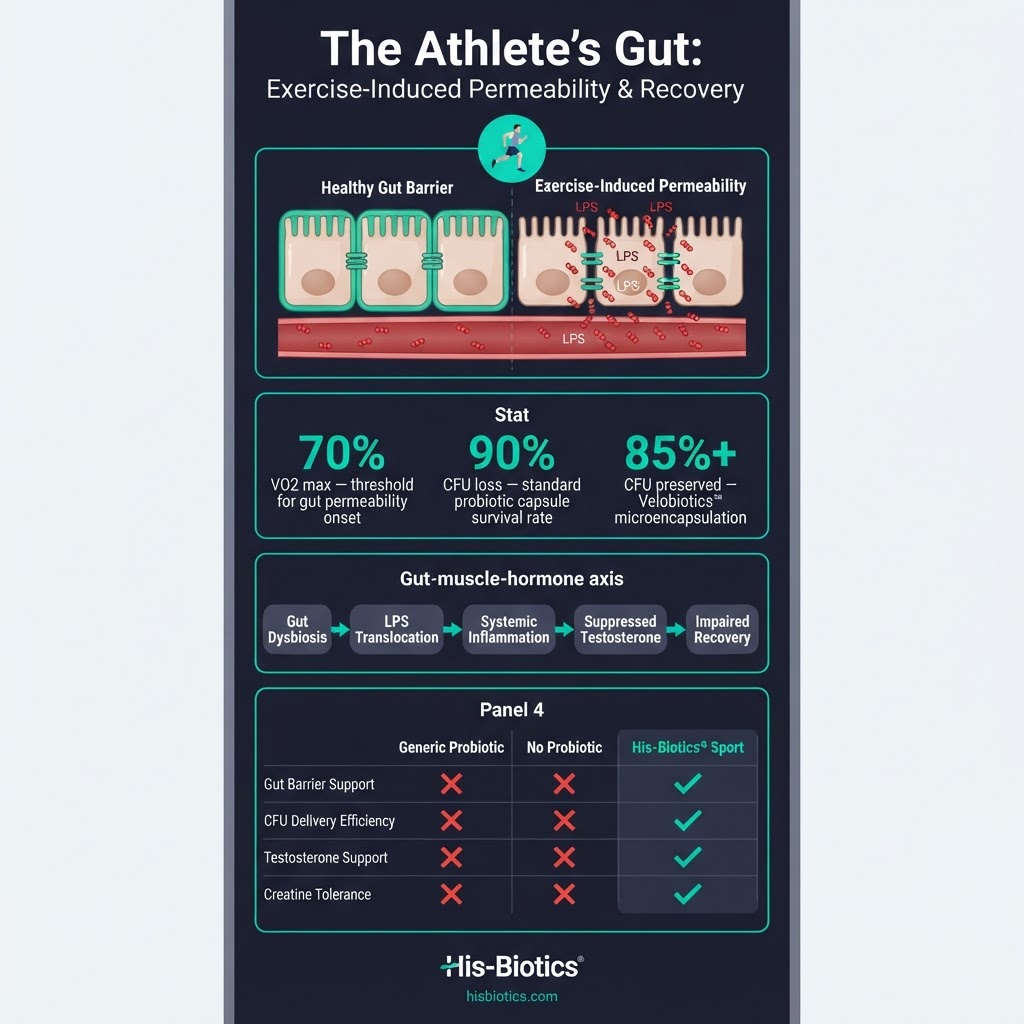
Most athletes obsess over what goes into their body before and after training — protein timing, creatine loading, BCAA ratios — yet almost nobody talks about the single physiological event that can undermine all of it: exercise-induced gut permeability. This is not a fringe concept. It is a well-documented, clinically relevant response that occurs when training intensity climbs above roughly 60–70% of VO2 max and splanchnic blood flow is redirected away from the intestinal lining to fuel working muscles. The result is a transient but meaningful breakdown of the tight junctions between intestinal epithelial cells — the very structures that act as your gut's security gate against bacteria, endotoxins, and partially digested proteins entering systemic circulation.
For serious athletes, this is a recurring insult. Five sessions per week at high intensity means five episodes of gut barrier stress, and if recovery between those sessions is inadequate, the cumulative damage compounds. Research published in Alimentary Pharmacology & Therapeutics (2017) demonstrated that endurance exercise lasting 60 minutes at 70% VO2 max significantly elevated plasma lipopolysaccharide (LPS) — a bacterial endotoxin — within 30 minutes of cessation, indicating real-time translocation of gut bacteria-derived compounds into the bloodstream. When LPS enters systemic circulation, it triggers low-grade inflammation via toll-like receptor 4 activation, which directly impairs muscle protein synthesis, delays glycogen replenishment, and blunts anabolic hormone signalling. In practical terms: your recovery stalls, your gains plateau, and your energy crashes — and you blame your sleep or your macros when the real culprit is sitting in your gut lining.
Understanding this mechanism is the first step toward solving it. The good news is that the gut microbiome is not a passive bystander in this process — it is an active participant that can either amplify the damage or, with the right interventions, provide meaningful structural and immunological protection. This is where gut microbiome research is pointing with increasing clarity, and it is the foundation on which His-Biotics® was built.
Creatine, BCAAs, and the Gut Microbiome: What the Science Actually Says
Creatine monohydrate remains one of the most evidence-backed ergogenic aids in sports nutrition, yet a significant subset of athletes reports gastrointestinal distress — bloating, cramping, loose stools — particularly during loading phases. The mechanism is not mysterious: high-dose creatine (20g/day in divided loads) draws water into the intestinal lumen via osmotic pressure and can alter luminal pH, creating conditions that disrupt commensal bacterial populations. A study in the Journal of the International Society of Sports Nutrition (2021) highlighted that gut microbiome composition influences creatine bioavailability, with higher populations of Lactobacillus and Bifidobacterium species correlating with better intestinal tolerance and reduced GI side effects. In short, creatine gut health is not just about dosing strategy — it is about the microbial environment in which that creatine is absorbed.
BCAAs present a similarly nuanced picture. Leucine, isoleucine, and valine are conditionally essential during high training loads, and their role in mTOR activation and muscle protein synthesis is well established. However, emerging data suggests that the gut microbiota plays a critical upstream role in BCAA metabolism — converting a portion of dietary BCAAs into short-chain fatty acids (SCFAs) like butyrate, which in turn serve as the primary fuel source for colonocytes and help reinforce tight junction integrity. A dysbiotic gut — one with reduced microbial diversity and depleted SCFA-producing species — will metabolise BCAAs less efficiently, reduce colonocyte fuel supply, and paradoxically worsen the barrier dysfunction you are trying to recover from. The concept of BCAA probiotics synergy is therefore not marketing language; it is an emerging nutritional logic grounded in gut-muscle axis physiology.
What this means practically for athletes is that layering a targeted probiotic formula alongside your standard ergogenic stack is not redundant — it is foundational. The microbiome determines how well you absorb, tolerate, and utilise everything else you put in your body. Neglecting it is like optimising your engine while ignoring the fuel system.
The Athletic Gut Microbiome: Built Different, Depleted Differently
Elite and recreational athletes do tend to have measurably different gut microbiomes compared with sedentary individuals — greater alpha diversity, higher relative abundance of butyrate-producing species like Faecalibacterium prausnitzii and Roseburia intestinalis, and more robust representation of Akkermansia muciniphila, which plays a key role in mucus layer integrity. This is exercise's gift to the gut. However, the same training loads that confer these benefits also impose repeated bouts of ischaemia-reperfusion injury on the gut lining, heat stress at the intestinal epithelium, and elevated cortisol exposure during prolonged sessions — all of which selectively deplete the very beneficial species that exercise builds up over time.
The paradox of the athletic gut is real: the harder you train without targeted microbiome support, the more you erode the microbial architecture that was helping you perform. Overtraining syndrome — characterised by unexplained performance decline, persistent fatigue, mood disruption, and recurrent illness — has a strong gut dysbiosis signature. Elevated intestinal permeability, reduced secretory IgA (the immune system's first-line mucosal defence), and increased translocation of LPS are consistently observed in overtrained athletes. This is not coincidental. The gut is both a mirror of systemic physiological stress and a driver of it.
For male athletes specifically, there is an additional hormonal dimension. Chronic low-grade endotoxaemia — the steady trickle of LPS into circulation from a leaky gut — suppresses Leydig cell function and reduces testosterone biosynthesis. The PubMed research on probiotics and testosterone is growing, with several studies now demonstrating that specific probiotic strains can reduce LPS-mediated testicular inflammation and support the androgen axis. For men training to build strength, body composition, and long-term hormonal health, this connection matters enormously.