Why Your Hardest Training Sessions Are Wrecking Your Gut
Most athletes obsess over their splits, their macros, and their recovery protocols — but very few give serious thought to what's happening inside their gut during a brutal training session. The truth is, intense physical exercise is one of the most reliable triggers of acute intestinal permeability, a phenomenon increasingly recognised in sports medicine as a significant barrier to optimal performance, recovery, and long-term health. If you've ever experienced GI cramping mid-race, bloating after a heavy lifting session, or that inexplicable fatigue that doesn't respond to rest, your gut wall may be part of the story. Understanding gut health in athletes is no longer optional — it's a clinical priority.
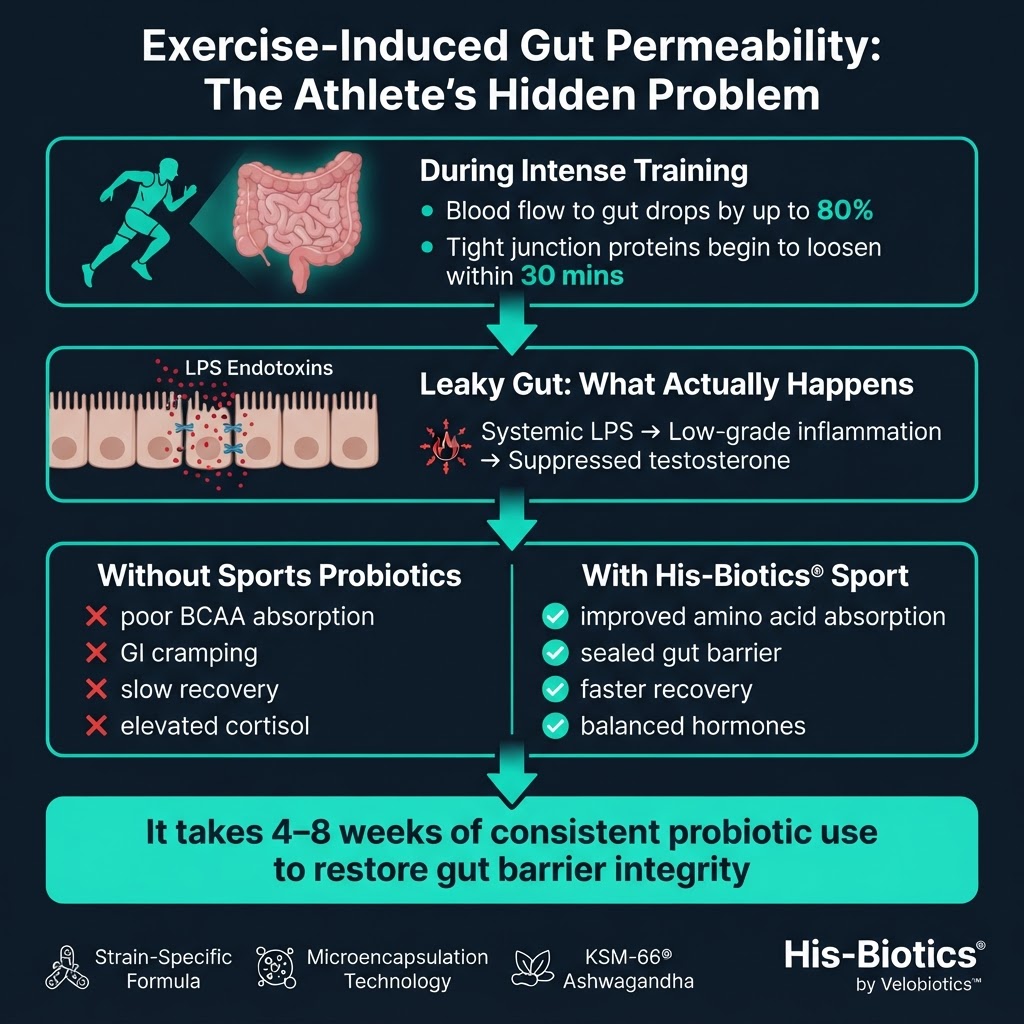
When you push hard — whether that's a long-distance run, a high-intensity interval session, or heavy compound lifts — blood is redirected away from your digestive organs and towards your working muscles. This process, known as splanchnic hypoperfusion, starves the intestinal epithelium of oxygen and nutrients. The tight junction proteins that normally hold your gut lining together — claudin, occludin, and zonulin-regulated structures — begin to loosen. The result is a transient but real increase in intestinal permeability, colloquially known as leaky gut. Bacterial endotoxins, particularly lipopolysaccharides (LPS) from gram-negative bacteria, can then migrate into systemic circulation and trigger low-grade inflammation that cascades through every system in your body.
A landmark study published in the Alimentary Pharmacology & Therapeutics journal (2012, Costa et al.) demonstrated that marathon runners showed significantly elevated plasma LPS and intestinal fatty acid-binding protein (I-FABP) — a biomarker of enterocyte damage — compared to sedentary controls. These findings weren't marginal; they were clinically meaningful, suggesting that endurance athletes in particular are operating with chronically stressed gut barriers. What's more, the inflammatory cascade triggered by exercise-induced permeability doesn't just affect your gut — it impairs protein synthesis, disrupts testosterone signalling, and slows the very recovery you're training so hard to optimise. This is where athletic performance gut health becomes a genuine performance lever, not just a wellness afterthought.
The Supplement Stack Problem: How Creatine and BCAAs Interact With Your Gut
The modern athlete's supplement shelf is typically stacked with creatine monohydrate and branched-chain amino acids (BCAAs), and for good reason — the evidence base for both is robust. Creatine remains one of the most studied ergogenic aids in sports science, with consistent findings showing improvements in power output, lean mass accrual, and high-intensity exercise capacity. BCAAs — leucine, isoleucine, and valine — play critical roles in muscle protein synthesis signalling and reducing exercise-induced muscle breakdown. But here's what most sports nutrition brands won't tell you: both of these compounds can create a challenging gut environment, particularly when the microbiome is already stressed from training.
Creatine gut health is a topic that deserves more clinical attention. A significant proportion of athletes — estimates suggest between 5–10% — report gastrointestinal side effects from creatine supplementation, including bloating, cramping, and loose stools. The mechanism isn't fully elucidated, but osmotic load in the gut lumen and the impact of unabsorbed creatine on microbial fermentation patterns are likely contributors. When you layer creatine on top of an already-permeable gut lining stressed by intense training, you're compounding the inflammatory burden on the intestinal epithelium. Similarly, high-dose BCAA supplementation can shift microbial ecology — research suggests that excess circulating BCAAs may alter the Bacteroidetes-to-Firmicutes ratio in ways that don't favour metabolic or inflammatory outcomes. BCAA probiotics pairing — that is, taking a targeted probiotic alongside your BCAA stack — is an emerging strategy to counteract these microbial disruptions.
A 2019 study published in Nutrients (Jäger et al.) specifically examined the interaction between probiotic supplementation and protein utilisation in resistance-trained males. The findings were striking: athletes supplementing with Bacillus coagulans alongside protein showed significantly improved amino acid absorption and reduced markers of muscle damage post-exercise compared to protein alone. This tells us something important — your gut's ability to absorb the supplements you're paying good money for depends entirely on the health of its microbial ecosystem and epithelial lining. Fixing the gut first isn't just good health advice; it's smart economics and smarter performance strategy. When you explore the explore our athlete formula at His-Biotics®, you'll see this principle embedded in every ingredient decision we've made.
Sports Probiotics: What the Science Actually Says
The term sports probiotics has entered mainstream fitness culture, but like most supplement categories, it's drowning in noise. Not every probiotic is a sports probiotic. A general-purpose Lactobacillus acidophilus capsule from the supermarket shelf is not the same as a clinically dosed, strain-specific formulation designed to address the unique stressors of athletic training. The distinction matters enormously, both for the outcomes you can expect and for the safety of what you're putting into a body already under significant physiological load. Gut microbiome research has expanded dramatically over the last decade, and it's now clear that strain specificity, dose, and delivery mechanism are the three variables that determine whether a probiotic actually does anything useful.
The most compelling evidence for exercise recovery probiotics centres on a handful of well-characterised strains. Lactobacillus plantarum LP299v has been shown in randomised controlled trials to reduce markers of intestinal permeability and improve iron absorption — both clinically relevant for endurance athletes. Bifidobacterium longum 35624 demonstrates meaningful anti-inflammatory activity at the mucosal level, helping to downregulate the NF-κB inflammatory pathway activated by LPS translocation. Bacillus subtilis DE111 has shown particular promise in resistance-trained populations, supporting protein digestion efficiency and reducing delayed-onset muscle soreness (DOMS) duration. These aren't theoretical mechanisms; they're outcomes observed in human clinical trials with actual athletes under real training loads. The PubMed research on probiotics in male performance specifically is growing rapidly and points consistently in one direction: the gut microbiome is a central mediator of hormonal and recovery outcomes in men.
Beyond strain selection, there is a critical and often-overlooked delivery challenge with probiotics. Most capsule-based formulations expose live bacteria to stomach acid, bile salts, and digestive enzymes before they reach the colon — the precise environment where they need to act. Viability at the site of action is everything. At Velobiotics™, we developed our proprietary microencapsulation technology specifically to address this. Each bacterial strain in our formulations is encased in a pH-responsive lipid matrix that remains intact through the acidic stomach environment and releases its payload in the small and large intestine, where colonisation and immune modulation actually occur. This isn't marketing language — it's the difference between a probiotic that works and one that doesn't survive long enough to try. His-Biotics® Sport is built on this foundation.