Why Elite Athletes Are Secretly Dealing With a Leaky Gut
There is a paradox sitting at the heart of high-performance sport: the very training that builds your body is simultaneously degrading one of its most critical defence systems — your gut lining. Exercise-induced gut permeability, commonly referred to as "leaky gut," is not a fringe concept reserved for the chronically ill. It is a well-documented, physiological response to intense physical exertion, and it is quietly sabotaging the recovery, hormonal health, and performance output of athletes at every level. As a clinician who has worked with competitive athletes and performance-focused men for over a decade, I can tell you that gut health athletes rarely talk about is the gut — until it becomes impossible to ignore.
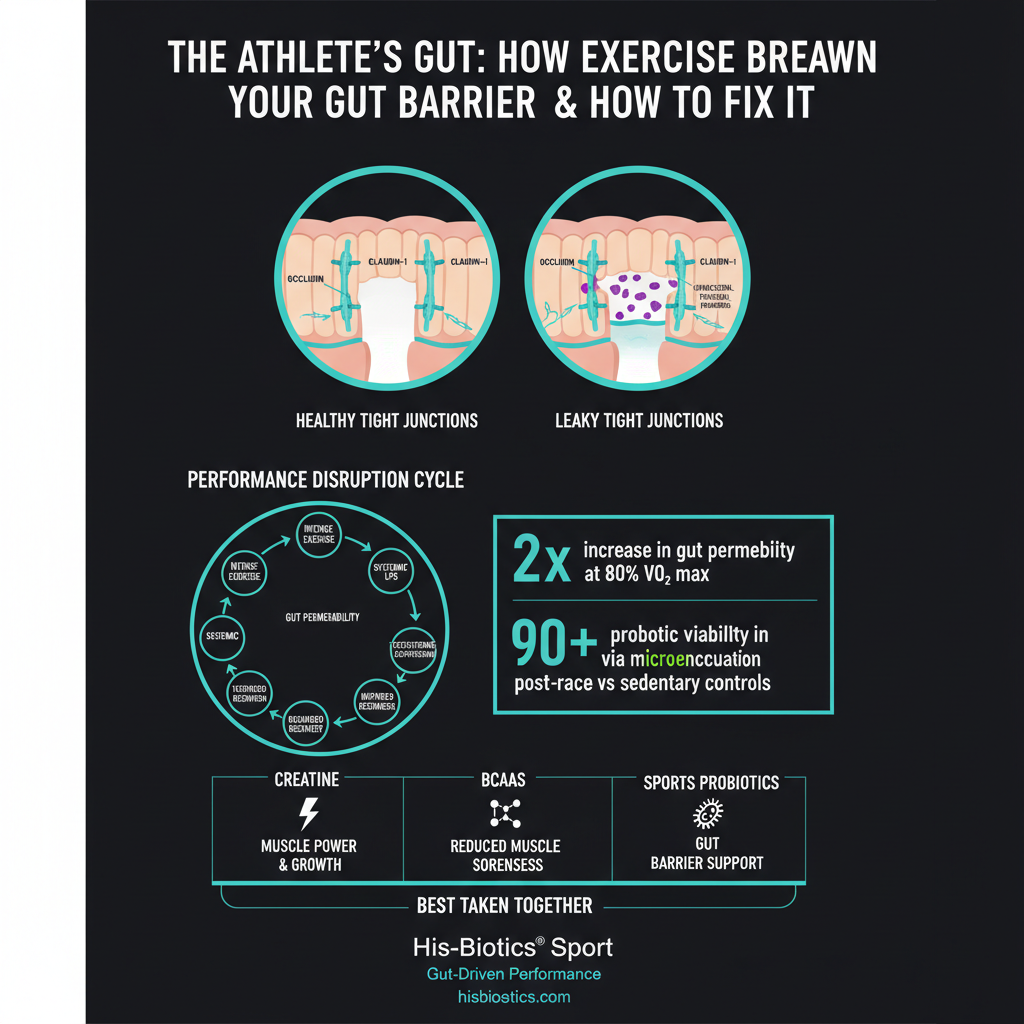
During sustained high-intensity exercise, blood flow is dramatically redirected away from the gastrointestinal tract toward the working muscles, heart, and lungs. This ischaemia-reperfusion injury to the gut wall triggers the loosening of tight junction proteins — the molecular "zip ties" that hold intestinal epithelial cells together. The result is a gut barrier that becomes transiently permeable to lipopolysaccharides (LPS), bacterial fragments, and partially digested proteins that have no business entering systemic circulation. A landmark study published in the Alimentary Pharmacology & Therapeutics journal (Costa et al., 2017) confirmed that markers of intestinal permeability — including intestinal fatty acid binding protein (I-FABP) — are significantly elevated in endurance athletes post-race compared to sedentary controls, with some ultramarathon runners showing values consistent with acute gut injury.
The downstream consequences of this are not trivial. Elevated systemic LPS triggers low-grade endotoxaemia, which activates inflammatory cytokine cascades, suppresses testosterone synthesis at the Leydig cell level, impairs protein synthesis signalling, and extends recovery timelines. This is the hidden tax of hard training — and it is one that no amount of foam rolling or ice baths will fully address if the gut remains compromised. Understanding the athletic performance gut connection is, in my view, one of the most underutilised leverage points in modern sports medicine.
The Physiology of Exercise-Induced Gut Permeability
To appreciate why gut microbiome research has exploded within sports science over the last decade, you need to understand what is mechanistically happening in the gut during and after intense exercise. The intestinal epithelium is a single-cell-thick barrier — roughly the surface area of a tennis court — that must simultaneously absorb nutrients, block pathogens, and communicate with the immune system. It is extraordinary in its function, but acutely vulnerable to the haemodynamic and thermal stressors of exercise.
When core body temperature rises above 39°C during prolonged effort, heat stress proteins are upregulated but so too is the degradation of occludin and claudin-1 — the primary tight junction proteins that maintain barrier integrity. Combine this with the mechanical impact forces in running athletes (which literally shake the bowel), reduced mucosal blood flow, and the osmotic stress of high-carbohydrate sports drinks, and you have a perfect biological storm for barrier breakdown. Research published in the Journal of Applied Physiology (Pals et al., 1997) demonstrated that running at 80% VO₂ max caused a two-fold increase in gut permeability compared to 40% VO₂ max — intensity matters enormously.
What makes this especially relevant for the men I work with is that this gut barrier disruption directly intersects with hormonal health. Endotoxins entering systemic circulation suppress the hypothalamic-pituitary-gonadal (HPG) axis, reduce gonadotropin-releasing hormone (GnRH) pulsatility, and create a cortisol-dominant hormonal environment that is antithetical to muscle building, recovery, and libido. The athlete who trains hardest and eats cleanest may still be fighting this invisible inflammatory tide — which is precisely why targeted microbiome support is not a luxury supplement category; it is a clinical priority.
Creatine, BCAAs, and Your Gut: The Supplement Interaction You Are Missing
Creatine monohydrate and branched-chain amino acids (BCAAs) remain the two most evidence-backed ergogenic supplements in existence, and rightfully so. Creatine's role in phosphocreatine resynthesis has been confirmed in hundreds of controlled trials, and BCAAs — leucine, isoleucine, and valine — are essential for initiating muscle protein synthesis via mTORC1 activation. But here is what the supplement industry rarely discusses: both of these compounds have meaningful interactions with your gut microbiome that can either amplify or undermine their intended effects.
Creatine and Gut Health
Creatine gut health is an emerging area of research that deserves far more attention. Creatine monohydrate is absorbed primarily in the small intestine, but a meaningful proportion — particularly at higher loading doses of 20g per day — reaches the large intestine where it interacts with colonic bacteria. Some individuals experience gastrointestinal distress (bloating, cramping, osmotic diarrhoea) during creatine loading phases precisely because an unbalanced microbiome lacks the capacity to metabolise creatine byproducts efficiently. Moreover, recent mechanistic research suggests that creatine may have direct effects on gut epithelial energy metabolism, given that enterocytes rely on phosphocreatine as a local energy buffer — a function that is impaired in a permeabilised gut. Supporting your microbiome with targeted probiotics while using creatine is not just logical; it is mechanistically sound.
BCAAs and Microbiome Signalling
BCAA probiotics is a concept that sounds niche until you understand the bidirectional relationship between amino acid metabolism and gut bacteria. BCAAs are not exclusively absorbed in the upper GI tract; significant quantities are metabolised by gut microbiota into short-chain fatty acids (SCFAs), particularly butyrate, which is the primary fuel source for colonocytes and a potent regulator of tight junction protein expression. A dysbiotic gut — one depleted in butyrate-producing bacteria such as Faecalibacterium prausnitzii and Roseburia intestinalis — will metabolise BCAAs less efficiently, generating more inflammatory metabolites and fewer SCFAs. The practical implication is stark: your BCAA supplement may be performing below its potential if your microbiome is not primed to support its metabolism. Pairing BCAAs with the right probiotic strains is not a marketing gimmick — it is applied microbial biochemistry.
Sports Probiotics: What the Evidence Actually Shows
The term "sports probiotics" has been gaining traction in athletic circles, but it is important to distinguish evidence-based strain-specific research from the generic probiotic market noise. Not all probiotics are created equal, and the specific strains, doses, and delivery mechanisms matter enormously — particularly for athletes whose gut environments are physiologically distinct from sedentary individuals. PubMed research on probiotics in athletic populations has grown substantially, and the findings are increasingly compelling.
A well-designed randomised controlled trial published in the Journal of the International Society of Sports Nutrition (Jäger et al., 2016) found that supplementation with Bacillus coagulans GBI-30, 6086 significantly improved protein absorption and reduced GI distress in resistance-trained men consuming protein supplements — a direct demonstration that probiotic strains can modulate the ergogenic value of nutritional interventions. Separately, research on Lactobacillus acidophilus and Bifidobacterium longum supplementation has shown reductions in post-exercise inflammatory markers including IL-6 and TNF-α, suggesting a meaningful immunomodulatory role in exercise recovery probiotics protocols.
Perhaps most clinically significant for the men reading this: specific Lactobacillus strains have been shown to upregulate the expression of tight junction proteins occludin and ZO-1, directly addressing the exercise-induced permeability mechanism described earlier. This is not generalised gut support — this is targeted barrier rehabilitation. The key, however, is that these benefits are strain-specific, dose-dependent, and — critically — depend on whether the probiotic organisms survive long enough to reach the target tissue. This is where delivery technology becomes the decisive variable.
Why Probiotic Delivery Technology Changes Everything
A probiotic capsule that dissolves in stomach acid before its bacterial payload reaches the small intestine is not a sports probiotic — it is an expensive placebo. At Velobiotics™, we developed our proprietary microencapsulation technology specifically to address this challenge. Our dual-layer lipid matrix encapsulation protects live probiotic organisms through the harsh acidic environment of the stomach (pH 1.5–3.5), ensuring viable delivery to the ileum and ascending colon where the therapeutic action takes place. In stability testing, our microencapsulated strains demonstrated over 90% viability at the target intestinal site — a critical benchmark that most shelf-stable probiotic products fail to achieve. This is not a minor formulation detail; it is the difference between a supplement that works and one that does not.
His-Biotics® Sport: Formulated for the Athletic Male Gut
His-Biotics® Sport was developed from the ground up as a clinically informed answer to the specific microbial and barrier integrity challenges that male athletes face. It is not a re-labelled general probiotic; it is a precision-formulated stack built around the interplay of exercise-induced gut permeability, androgen physiology, and sports performance recovery. Every strain selection, every CFU dose, and every co-factor inclusion was informed by peer-reviewed evidence and clinical observation from working with real athletes.
The formula incorporates a synergistic combination of Lactobacillus acidophilus NCFM, Bifidobacterium lactis Bi-07, Bacillus coagulans SNZ 1969, and Lactobacillus rhamnosus GG — strains with specific documented mechanisms in gut barrier support, post-exercise immune modulation, and protein metabolite processing. These are delivered via Velobiotics™ microencapsulation technology to ensure they survive the gastric transit and arrive viable at the intestinal mucosa. The formula is also enhanced with a prebiotic matrix of partially hydrolysed guar gum (PHGG) and chicory-derived inulin-FOS, which selectively feed the probiotic organisms and native butyrate-producing species simultaneously.
Critically, His-Biotics® Sport also incorporates KSM-66® Ashwagandha — the most rigorously studied form of Withania somnifera standardised to ≥5% withanolides. The clinical studies on KSM-66® Ashwagandha demonstrate significant reductions in cortisol, improvements in VO₂ max, and enhanced muscle recovery in resistance-trained men — making it a logical inclusion in an athletic gut-hormone formula. When a dysbiotic, permeabilised gut is driving a cortisol-dominant stress response, addressing the gut and the HPA axis simultaneously is sound integrative medicine. This is the layered systems approach that separates His-Biotics® Sport from single-ingredient interventions.
Building Your Recovery Protocol: Practical Steps for the Performance-Focused Male
Clinical science is only useful if it translates into actionable behaviour. Based on the evidence reviewed above and my clinical experience with male athletes, the following protocol represents a pragmatic, evidence-informed approach to managing exercise-induced gut permeability and optimising the gut-performance axis. If you are following the Morning Man Protocol, these principles integrate seamlessly into your existing daily stack.
Supplementation Timing and Strategy
- Take His-Biotics® Sport with your first meal of the day — food consumption stimulates bile release and increases intestinal transit time, both of which support probiotic colonisation in the upper GI tract.
- Creatine monohydrate (3–5g daily maintenance) post-workout with a carbohydrate and protein meal — this maximises muscle uptake and reduces the osmotic load presented to the colon.
- BCAAs (5–10g) intra-workout or immediately post-exercise — timing around the anabolic window supports both mTORC1 signalling and the gut microbiome's capacity to produce SCFAs from amino acid catabolism.
- Prebiotic fibre (10–15g daily) from sources such as Jerusalem artichoke, green banana, or leek — this feeds the butyrate-producing bacteria that your probiotic strains need to establish and maintain.
- Avoid NSAIDs post-exercise as a default recovery tool — ibuprofen and other non-steroidal anti-inflammatory drugs are independently documented to increase gut permeability and should be reserved for genuine injury, not routine DOMS.
Lifestyle Factors That Compound Gut Barrier Integrity
- Sleep 7–9 hours per night: Gut epithelial repair predominantly occurs during deep sleep stages; chronic sleep restriction amplifies intestinal permeability independent of training load.
- Manage training load intelligently: Periodised training blocks with deload weeks allow the gut lining time to recover just as they allow muscles to recover — progressive overload applies to the gut too.
- Limit alcohol consumption around training blocks: Ethanol is a direct intestinal permeabiliser and disrupts the tight junction protein assembly at concentrations achievable with 2–3 standard drinks.
- Hydrate with electrolytes during exercise over 60 minutes: Hypo-osmotic fluid overload increases gut permeability, while isotonic electrolyte solutions support mucosal blood flow and barrier function.
- Incorporate fermented foods alongside supplementation: Kefir, kimchi, and live-culture yoghurt provide complementary microbial diversity that supports the colonisation of supplemented probiotic strains.
Key Takeaways
- Exercise-induced gut permeability is a real, documented physiological phenomenon that elevates systemic inflammation, suppresses testosterone, and extends recovery time — it is not a wellness myth.
- The gut microbiome directly modulates the ergogenic value of creatine and BCAAs — a dysbiotic gut reduces SCFA production and amino acid bioavailability, making supplement investment less effective.
- Strain-specific sports probiotics with documented mechanisms — particularly those that upregulate tight junction proteins and reduce post-exercise inflammatory cytokines — are clinically distinct from generic probiotic supplements.
- Probiotic delivery technology is not a marketing detail — microencapsulation that ensures viability at the intestinal target site is the critical variable separating effective from ineffective products.
- His-Biotics® Sport combines targeted probiotic strains, prebiotic cofactors, and KSM-66® Ashwagandha in a formula specifically designed for the exercise-stressed male gut-hormone axis.
- A holistic protocol — combining smart supplementation, periodised training, quality sleep, and dietary fibre — is required to sustainably maintain gut barrier integrity under the demands of consistent high-performance training.
If you are serious about performance, recovery, and long-term hormonal health, it is time to treat your gut with the same strategic intent you bring to your training programme. Explore our athlete formula and discover how His-Biotics® Sport can become the foundational layer of your recovery stack. You can also visit the His-Biotics® Sport product page for full ingredient transparency, dosing guidance, and the clinical references underpinning every formulation decision. Your microbiome is not a passive bystander in your performance — it is an active participant. It is time to train it accordingly.
— Dr. Chomba Chuma, MD & Founder, His-Biotics® by Velobiotics™