
Leaky Gut in Athletes: How Sports Probiotics Fix the Break
Back to Blog
Athletic PerformanceHis-Biotics® Sport

Leaky Gut in Athletes: How Sports Probiotics Fix the Break

Dr. Chomba Chuma, MD & Founder•27 July 2026•11 min read

Your Hardest Training Sessions Are Quietly Wrecking Your Gut

There's a conversation happening in elite sports science that most gym-goers and recreational athletes never hear. It goes something like this: the very training that's supposed to make you harder, faster, and stronger is simultaneously compromising one of your body's most critical defence systems — your intestinal barrier. Exercise-induced gut permeability, colloquially known as "leaky gut in athletes," is not a fringe concept or wellness-world hyperbole. It is a measurable, reproducible physiological phenomenon documented in peer-reviewed literature, and it has profound implications for gut health in athletes, recovery timelines, hormonal output, and long-term performance. As a clinician who has worked with athletes across multiple disciplines, I can tell you that this is the missing variable in most men's training programmes — and it's one that the supplement industry has been woefully slow to address.

During intense or prolonged exercise, blood is shunted away from your gastrointestinal tract and redirected to working muscles, the heart, and the lungs — a process called splanchnic hypoperfusion. The gut can lose up to 80% of its resting blood flow during maximal efforts. This ischaemia triggers oxidative stress and inflammation in the epithelial lining of the intestine, loosening the tight junctions between enterocytes — the specialised cells that form your gut wall. The result is a transiently "leaky" gut through which bacterial endotoxins, particularly lipopolysaccharides (LPS), can migrate into systemic circulation. A 2017 study published in Alimentary Pharmacology & Therapeutics confirmed that endurance athletes showed significantly elevated plasma LPS levels post-exercise compared to sedentary controls, with corresponding spikes in inflammatory cytokines including IL-6 and TNF-α. These are not benign bystanders — they actively impair muscle protein synthesis, disrupt testosterone signalling, and slow recovery.

What makes this especially relevant for men who train seriously is the compounding effect. A single hard session creates transient permeability. String together a week of two-a-days, a poorly timed creatine loading phase, or a high-dose BCAA protocol without gut support, and you're creating a chronic low-grade inflammatory state that undermines everything you're working for. The good news — and this is where the science becomes genuinely exciting — is that targeted sports probiotics have emerged as one of the most effective interventions for closing that barrier, accelerating recovery, and optimising the gut-muscle axis. This is precisely the clinical rationale behind the formulation of His-Biotics® Sport.

The Gut-Muscle Axis: Why Athletic Performance Starts Below the Belt

The concept of the gut-muscle axis is gaining traction in gut microbiome research circles, and for good reason. Your gastrointestinal microbiome is not simply a digestive accessory — it is an endocrine organ, an immune modulator, and a direct regulator of substrate availability for muscle metabolism. Specific bacterial species in the gut are responsible for producing short-chain fatty acids (SCFAs) like butyrate, propionate, and acetate, which serve as primary fuel sources for colonocytes and have systemic anti-inflammatory effects. When the gut lining is compromised and microbial diversity falls — as consistently occurs in overtrained athletes — SCFA production drops, intestinal immune tone deteriorates, and systemic inflammation rises.

There is also a compelling hormonal dimension to this. The gut microbiome plays a meaningful role in regulating the hypothalamic-pituitary-gonadal (HPG) axis, the central command structure for testosterone production. Certain commensal bacteria, particularly Lactobacillus reuteri, have been shown in animal studies to elevate circulating testosterone and preserve testicular mass even under conditions of caloric restriction and chronic stress. The broader body of PubMed research on probiotics and male hormonal health is still emerging, but the mechanistic plausibility is robust: a healthier gut equals lower systemic LPS load, lower inflammation, less cortisol-driven HPG suppression, and — by extension — better androgen output. For any man serious about athletic performance and gut health, this axis deserves far more attention than it currently receives.

Furthermore, the gut is responsible for the absorption of virtually every nutrient and ergogenic compound you consume. Protein digestion, amino acid uptake, creatine bioavailability, electrolyte transport — all of these processes depend on a structurally sound and microbiologically diverse intestinal environment. When your gut is inflamed and permeable, you may be consuming optimal quantities of every macro and micronutrient and still absorbing a fraction of what you need. This is one of the most under-appreciated reasons why some men plateau despite apparently solid nutrition and supplementation protocols.

Creatine, BCAAs, and the Gut: What the Labels Don't Tell You

Creatine monohydrate remains one of the most evidence-backed ergogenic aids in sports nutrition, with over three decades of research supporting its role in phosphocreatine resynthesis, power output, and lean mass accrual. But there is a less-discussed caveat embedded in the literature on creatine and gut health: gastrointestinal distress is the most commonly reported side effect of creatine supplementation, particularly during loading phases. Bloating, cramping, loose stools, and nausea are reported by a meaningful subset of users, and the mechanism is not fully resolved. One plausible explanation involves osmotic water retention in the gut lumen, which can alter the microenvironment and transiently disrupt microbial composition. A 2003 paper in the Journal of Athletic Training noted that GI complaints were dose-dependent and most pronounced during the 20g/day loading phase — suggesting that the gut's tolerance threshold, not the compound itself, is the limiting factor for many athletes.

Branched-chain amino acids present a similarly nuanced picture. BCAAs — leucine, isoleucine, and valine — are widely consumed to support muscle protein synthesis, reduce exercise-induced catabolism, and decrease perceived exertion during sustained effort. However, high-dose or isolated BCAA supplementation without adequate gut microbial diversity can lead to suboptimal utilisation. The gut microbiome actively participates in amino acid metabolism; certain bacteria compete for luminal amino acids, while others produce bioactive metabolites from them. Without a healthy microbial ecosystem, the fate of supplemented BCAAs is less predictable. The clinical implication is clear: BCAA and probiotic co-administration is not just a marketing angle — it is a physiologically logical strategy for maximising return on your supplementation investment.

This is a key reason why men who combine His-Biotics® Sport with their existing creatine and BCAA protocols consistently report improved tolerability, reduced bloating, and — critically — faster perceived recovery. The probiotic strains selected for the His-Biotics® Sport formulation are specifically chosen to reinforce tight junction integrity, downregulate intestinal NF-κB signalling (a primary driver of gut inflammation), and support the enzymatic environment needed for optimal protein and creatine absorption. This isn't about replacing your ergogenics — it's about making them work properly.

Key Supplements and Their Gut Interactions

  • Creatine Monohydrate: Highly effective but osmotically active — GI distress risk is highest during loading phases (20g/day). Gut-supportive probiotics reduce bloating and improve tolerability.
  • BCAAs (Leucine, Isoleucine, Valine): Gut microbiome composition directly affects luminal amino acid metabolism. A diverse microbiome improves net BCAA utilisation.
  • Whey Protein: Rapid gastric emptying can challenge a compromised gut lining. Proteolytic probiotic strains enhance hydrolysis and reduce undigested peptide load reaching the colon.
  • Caffeine: Stimulates gut motility and can exacerbate permeability in already-stressed intestinal tissue — particularly relevant in fasted pre-workout protocols.
  • NSAIDs (e.g., ibuprofen): Widely used by athletes for pain management, but strongly linked to increased intestinal permeability — compounding exercise-induced damage.
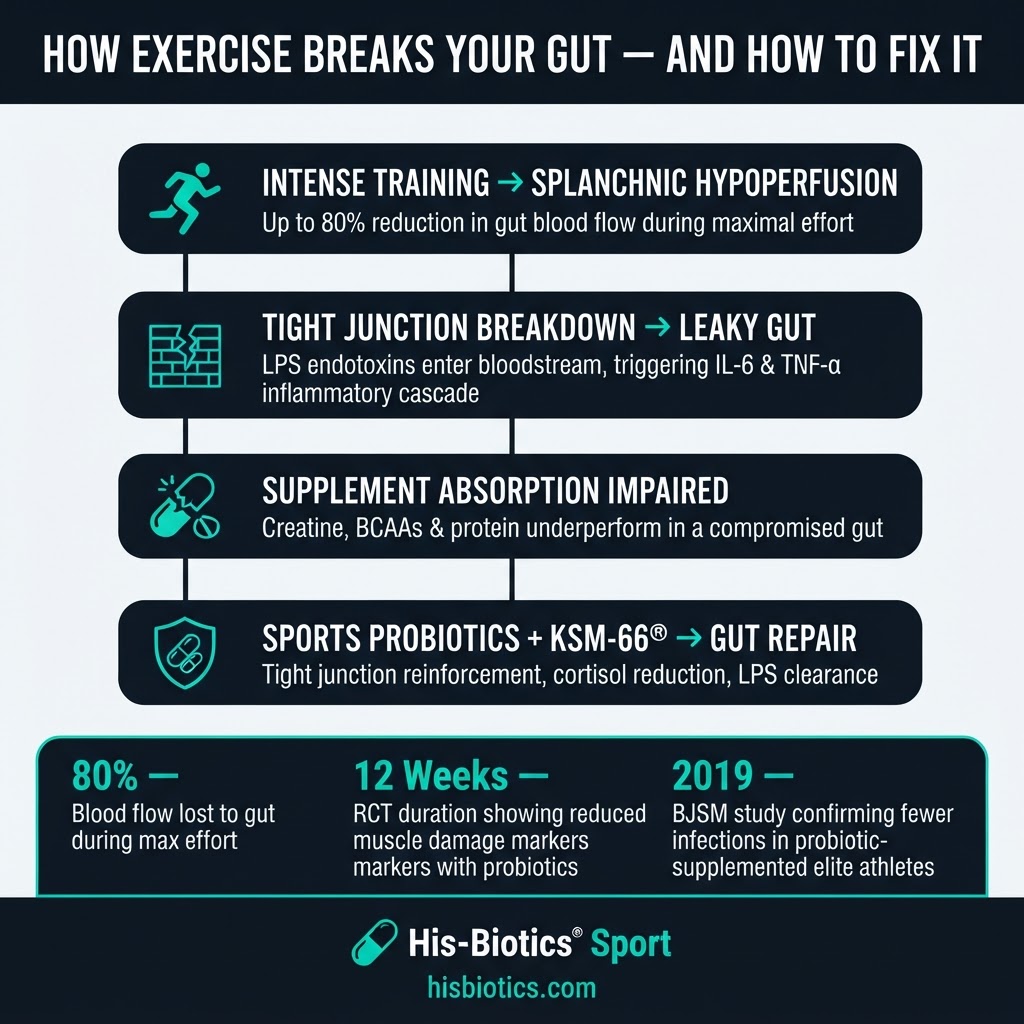
Article infographic

Infographic: Key concepts illustrated

Sports Probiotics: The Clinical Evidence for Exercise Recovery

The category of exercise recovery probiotics is no longer speculative. A landmark randomised controlled trial published in the British Journal of Sports Medicine (2019) found that elite rugby players supplementing with a multi-strain probiotic for 12 weeks experienced significantly fewer upper respiratory tract infections, reduced duration of GI symptoms, and improved intestinal permeability markers compared to placebo — all without altering their training loads. This is clinically important because upper respiratory infections and GI dysfunction are the two most common non-injury causes of training disruption in competitive athletes. Addressing gut integrity is not a peripheral wellness concern — it is a direct performance variable.

Another study, published in the Journal of the International Society of Sports Nutrition (2020), demonstrated that Lactobacillus acidophilus and Bifidobacterium longum supplementation over 4 weeks attenuated post-exercise creatine kinase (CK) elevation — a biomarker of muscle damage — compared to placebo in resistance-trained men. The proposed mechanism involves probiotic-mediated reduction in intestinal LPS translocation, which lowers systemic inflammatory signalling that would otherwise amplify muscle damage responses. In practical terms: less gut-derived inflammation means less secondary muscle damage, faster clearance of metabolic waste products, and a shorter recovery window between sessions.

The delivery mechanism matters as much as the strains themselves. Many commercially available probiotics fail to survive gastric acid transit, arriving in the small and large intestine with insufficient viable colony-forming units to exert meaningful clinical effects. This is why Velobiotics™ microencapsulation technology — used in every His-Biotics® formulation — is not a marketing flourish but a functional necessity. By encapsulating probiotic strains within a pH-resistant lipid matrix, Velobiotics™ technology ensures that the bacteria you swallow are the bacteria that actually reach their target environment, alive and metabolically active. For athletes, this means the strains responsible for butyrate production, tight junction reinforcement, and inflammatory modulation are delivered where they need to be — not neutralised in the stomach before they can do their job.

If you want to understand how gut optimisation fits into a comprehensive male performance protocol, the Morning Man Protocol outlines a structured approach that integrates gut health, hormonal support, and recovery nutrition into a coherent daily framework — one that I've developed and refined through years of clinical practice.

KSM-66® Ashwagandha, Cortisol, and the Stress-Gut Connection in Training

No discussion of gut integrity in athletes is complete without addressing the cortisol axis. Psychological and physiological stress — both of which are inherent to serious training — elevate cortisol, and sustained cortisol elevation has direct, well-documented negative effects on gut barrier function. Glucocorticoids increase intestinal permeability by disrupting tight junction protein expression (specifically occludin and claudin-1) and by suppressing the mucosal immune system, reducing secretory IgA levels that form the gut's first line of immunological defence. The overtraining syndrome, at its core, is partly a gut-cortisol disorder — a state where training stress has overwhelmed the body's adaptive capacity and the gut has become a systemic liability rather than an asset.

This is where the inclusion of KSM-66® Ashwagandha in the His-Biotics® Sport formulation becomes clinically meaningful rather than merely fashionable. KSM-66® is the most extensively studied root extract of Withania somnifera, with a body of evidence demonstrating significant reductions in serum cortisol, improvements in testosterone-to-cortisol ratio, and enhanced VO2 max in physically active individuals. The clinical studies on KSM-66® Ashwagandha include randomised, double-blind, placebo-controlled trials — the gold standard — making it one of the most robustly validated adaptogenic compounds in sports supplementation. By moderating cortisol output, KSM-66® indirectly supports gut barrier integrity, creating a synergistic effect when combined with the probiotic strains in the His-Biotics® Sport stack.

The practical implication for athletes is significant. Training-induced cortisol spikes are unavoidable and, to a degree, desirable — they form part of the hormetic stress signal that drives adaptation. But chronic elevation, the kind that accumulates across weeks of high-volume training without adequate recovery support, creates a physiological environment in which the gut cannot heal between sessions. Combining gut-specific probiotics with an evidence-graded cortisol modulator addresses both sides of this equation: rebuilding the barrier while reducing the stress signal that keeps tearing it down. This dual-target approach is what separates a well-designed athletic probiotic from a generic wellness supplement.

Signs Your Training May Be Compromising Your Gut

  • Persistent bloating or cramping that worsens in training blocks and improves during deload weeks
  • Frequent upper respiratory infections, particularly in the 24–48 hours following your hardest sessions
  • Food sensitivities that seem to come and go with training volume
  • Unusually slow recovery or persistent muscle soreness beyond 72 hours post-session
  • GI distress when consuming creatine, whey protein, or pre-workout supplements
  • Disrupted sleep quality during high-volume training phases (a downstream effect of elevated LPS and inflammatory cytokines)
  • Mood dysregulation, brain fog, or low motivation — all linked to gut-brain axis disruption under training stress

Key Takeaways

The intersection of gut health and athletic performance is no longer a niche research topic — it is a central pillar of modern sports medicine. Whether you're a competitive athlete or a serious recreational trainer, your gut is either supporting your ambitions or quietly sabotaging them. Here is a concise summary of the most clinically important points from this article:

  • Exercise-induced gut permeability is real and measurable: Intense training causes splanchnic hypoperfusion and LPS translocation, driving systemic inflammation that impairs recovery and hormonal output.
  • Your supplements can't work in a broken gut: Creatine, BCAAs, and protein all depend on intestinal integrity and microbial diversity for optimal absorption and utilisation.
  • Multi-strain sports probiotics have RCT-level evidence: Studies in elite athletes demonstrate reduced muscle damage markers, fewer infections, and improved GI tolerance with targeted probiotic supplementation.
  • Delivery technology determines efficacy: Velobiotics™ microencapsulation ensures viable strain delivery to the intestinal target site — a non-negotiable for clinical-grade results.
  • Cortisol management is gut management: KSM-66® Ashwagandha's cortisol-lowering effects directly support tight junction recovery and barrier integrity between training sessions.
  • A gut-first approach accelerates every other training adaptation: Prioritising intestinal health is not a detour from performance goals — it is the most direct route to achieving them.

Ready to Train Smarter From the Inside Out?

If any of the above resonates with your training experience — the sluggish recovery, the supplement intolerance, the inexplicable performance plateaus — your gut is likely the missing variable. I formulated His-Biotics® Sport specifically for this clinical need: a synbiotic stack built around the physiology of the male athlete, combining targeted probiotic strains, KSM-66® Ashwagandha, and Velobiotics™ microencapsulation technology to address exercise-induced gut permeability at its root. To understand the full range of what we've built for male performance, I'd encourage you to explore our athlete formula and see how His-Biotics® Sport fits within a comprehensive gut-performance protocol. Your training deserves a gut that's as optimised as your programme — and now you have the science to make that happen.

— Dr. Chomba Chuma, MD & Founder, His-Biotics® by Velobiotics™

#sports probiotics#gut health athletes#exercise recovery probiotics#creatine gut health#athletic performance gut#leaky gut athletes#BCAA probiotics

Get the next article in your inbox

Men's gut and hormone science made simple. No spam, unsubscribe anytime.

👨‍⚕️
Dr. Chomba Chuma, MD & Founder

Dr. Chomba Chuma is the founder of His-Biotics® and a practising physician specialising in men's gut-microbiome health, hormonal optimisation, and performance medicine. With over 15 years of clinical experience, he bridges cutting-edge microbiome science with practical male health strategies.

H
His-Biotics Assistant
online · usually replies in seconds
Today
General wellness information, not medical advice. Chats may be stored to improve service.


