Why Your Hardest Training Sessions Are Destroying Your Gut
There is a paradox sitting at the heart of elite athletic performance that most coaches, trainers, and even physicians routinely overlook: the very training stimulus that makes you stronger, faster, and more explosive is simultaneously causing measurable damage to the intestinal barrier. Exercise-induced gut permeability — colloquially called leaky gut in athletes — is not a fringe concept or wellness buzzword. It is a well-documented physiological response to high-intensity and prolonged endurance exercise, and it has real consequences for recovery, hormonal health, and long-term performance. As a clinician who works extensively with male athletes and high performers, I see the downstream effects of this phenomenon weekly in my practice, and yet it remains one of the most underappreciated variables in sports nutrition.
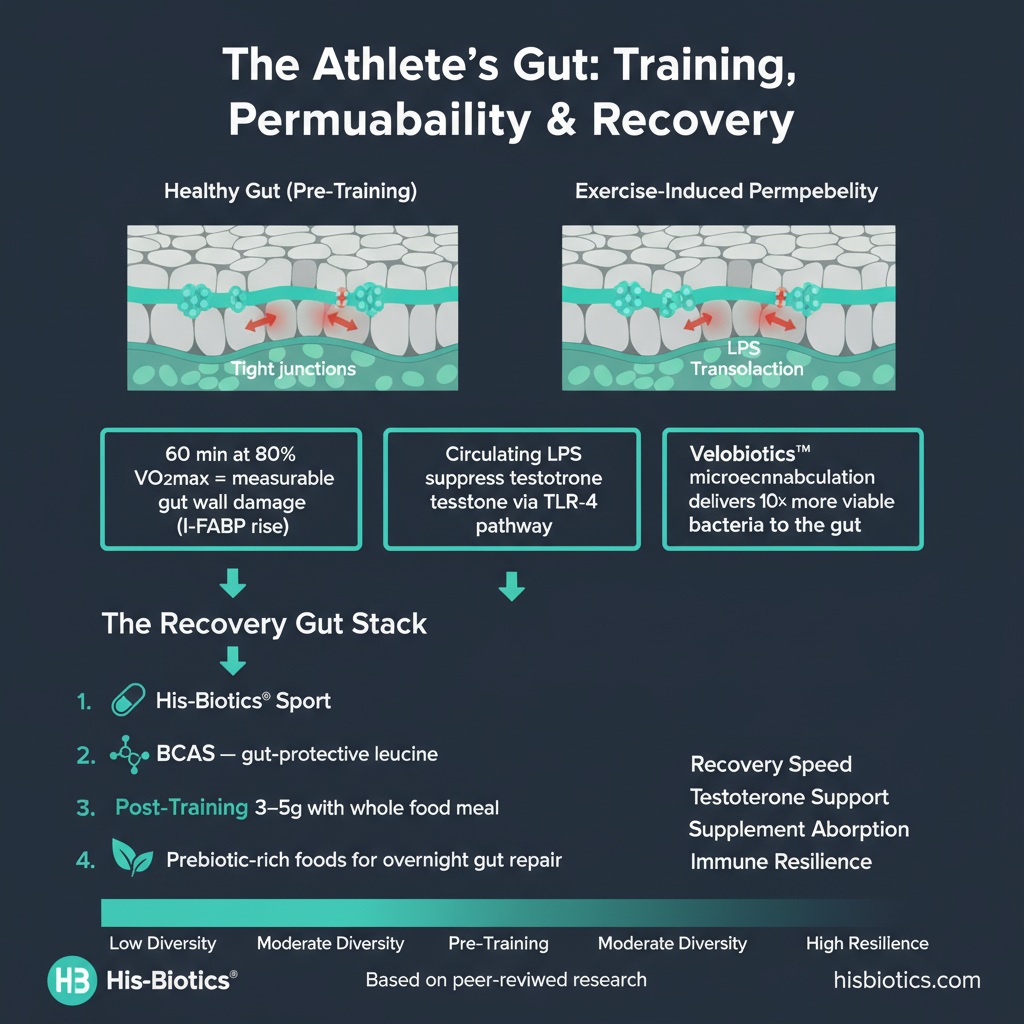
During intense physical exertion, blood is shunted away from the splanchnic circulation — the network of vessels supplying the gut — toward working muscles. This ischaemia-reperfusion cycle causes oxidative stress directly to the intestinal epithelium, loosening the tight junctions that ordinarily keep the gut lining sealed. A landmark study published in Alimentary Pharmacology & Therapeutics (2012) by Pals et al. demonstrated that running at 80% VO₂max for just 60 minutes produced a statistically significant rise in intestinal fatty acid binding protein (I-FABP), a biomarker of gut epithelial injury, compared to rest. That is one hour of hard running causing measurable structural damage to your gut wall. This is not a theoretical risk — it is a reproducible, quantifiable event that occurs in trained athletes across disciplines.
What happens when those tight junctions loosen? Lipopolysaccharide (LPS) — fragments of gram-negative bacterial cell walls — translocate from the gut lumen into systemic circulation. Circulating LPS triggers a low-grade inflammatory cascade mediated by Toll-like receptor 4 (TLR-4), elevating pro-inflammatory cytokines such as IL-6, IL-1β, and TNF-α. For the male athlete, this inflammatory burden directly suppresses the hypothalamic-pituitary-gonadal axis, reducing testosterone output and impairing the anabolic signalling required for muscle repair. The gut, in other words, is not a passive bystander in your recovery — it is an active participant, and when it is compromised, your entire hormonal and immune architecture suffers accordingly.
This is precisely why gut health in athletes has become one of the fastest-growing areas of sports science research. Understanding and addressing intestinal permeability is no longer optional for serious performers. It is foundational.
The Role of Creatine, BCAAs, and the Gut Microbiome
Two of the most universally used supplements in male athletic performance — creatine monohydrate and branched-chain amino acids (BCAAs) — interact with the gut in ways that most product labels will never tell you about. The conversation around creatine and gut health is particularly nuanced. Creatine is absorbed primarily in the small intestine via a sodium-dependent transporter, and at higher loading doses (20g per day during the loading phase), a meaningful fraction reaches the colon unabsorbed. There, colonic bacteria ferment the excess creatine, which can produce osmotic stress and the gastrointestinal discomfort — bloating, cramping, loose stools — that a significant proportion of athletes report during creatine loading protocols.
More importantly for our purposes, emerging gut microbiome research suggests that the composition of your intestinal flora directly influences creatine uptake efficiency and tolerability. Athletes with a diverse, balanced microbiome and robust tight junction integrity appear to absorb creatine more effectively and with fewer GI side effects. This is not merely an issue of comfort — impaired creatine absorption means you are not getting the ergogenic benefit you paid for, and a disrupted gut lining is amplifying the systemic inflammation that creatine is partly meant to offset.
The picture with BCAAs and gut health is equally compelling. Leucine, isoleucine, and valine are critical for mTOR activation and muscle protein synthesis, but their metabolic fate is not exclusively muscular. BCAAs serve as a fuel source for intestinal enterocytes, supporting the integrity and regenerative capacity of the gut lining itself. A 2021 study published in Nutrients by Chen et al. found that leucine supplementation attenuated exercise-induced intestinal permeability in endurance athletes, reducing I-FABP levels and circulating LPS compared to placebo. In other words, BCAAs are not just anabolic — they are gut-protective, provided the gut microbiome is healthy enough to metabolise them efficiently and the intestinal environment is conducive to their uptake.
The critical insight here is that neither creatine nor BCAAs work optimally in a compromised gut. If your intestinal barrier is repeatedly breached by training stress and never properly restored, you are essentially pouring expensive supplements into a leaking vessel. The solution is not to abandon these evidence-based ergogenics — it is to fortify the gut so they can work as intended. That is where sports probiotics become indispensable.
Sports Probiotics: What the Science Actually Says
The term probiotic is used so liberally in the wellness space that it has almost lost its clinical meaning. For athletic performance specifically, not all probiotics are created equal, and the distinction matters enormously. Exercise recovery probiotics need to accomplish several things simultaneously: they must survive the acidic gastric environment to reach the small and large intestine in viable numbers, they must colonise effectively enough to influence the mucosal immune system and tight junction expression, and they must be matched to the specific physiological stressors of intense training. Generic supermarket yoghurt cultures simply do not meet this bar.
The evidence base for targeted probiotic intervention in athletic populations has grown substantially over the past decade. A pivotal randomised controlled trial published in the Journal of the International Society of Sports Nutrition (2019) by West et al. demonstrated that Lactobacillus fermentum supplementation over 11 weeks in male athletes produced a significant reduction in upper respiratory tract infection incidence and severity — a direct proxy for mucosal immune competence — compared to placebo. Given that immune suppression following intense training is mediated in part through gut permeability and LPS translocation, this finding aligns precisely with the mechanistic framework I outlined above. Protect the gut lining, modulate the mucosal immune response, reduce systemic inflammatory burden, and the athlete stays healthier and recovers faster.
Beyond immune resilience, there is accumulating evidence connecting the gut microbiome to testosterone biosynthesis — a relationship I follow closely in my clinical work. You can explore the growing body of PubMed research on probiotics and testosterone, which increasingly points toward specific strains modulating androgen metabolism via the gut-testes axis. For male athletes, this hormonal dimension of gut health is not peripheral — it is central to muscle mass, recovery speed, libido, and competitive drive.
The specific strains that matter most for athletic performance and gut health include Lactobacillus acidophilus, Bifidobacterium longum, Lactobacillus plantarum, and Lactobacillus rhamnosus, each selected for their documented roles in tight junction upregulation, anti-inflammatory cytokine modulation, and mucosal IgA production. The delivery mechanism matters just as much as the strains themselves — which is why I designed the His-Biotics® Sport formula with Velobiotics™ proprietary microencapsulation technology at its core.
Velobiotics™ Microencapsulation: Why Delivery Is Everything
One of the most frustrating truths in the probiotic industry is that the vast majority of live cultures in standard capsule or powder formulations never reach the intestine in clinically meaningful numbers. Stomach acid, bile salts, and pancreatic enzymes collectively destroy between 90–99% of unprotected bacterial cultures before they ever reach the site of intended action. This is why so many athletes try generic probiotics, notice no meaningful change in gut function or recovery, and conclude that probiotics do not work. In most cases, the probiotics worked fine — in the laboratory. They simply did not survive the journey through your digestive tract.
Velobiotics™ microencapsulation technology addresses this problem by encasing each bacterial strain within a pH-responsive lipid matrix that remains structurally intact through the low-pH environment of the stomach and the bile-rich milieu of the duodenum, releasing its payload selectively in the terminal ileum and colon — precisely where the bacteria are needed. Independent viability testing has demonstrated that Velobiotics™ microencapsulated strains deliver up to 10× greater viable cell counts to the intestinal mucosa compared to standard enteric-coated capsules. For the athlete dealing with exercise-induced gut permeability, this difference in delivery is not academic — it translates directly into measurable improvements in tight junction integrity, mucosal immune function, and inflammatory marker profiles.
Every dose of His-Biotics® Sport is formulated with this delivery architecture as its non-negotiable foundation. The strains are selected for athletic populations specifically, the colony-forming unit count is calibrated to what peer-reviewed intervention studies have used to demonstrate efficacy, and the microencapsulation ensures those numbers are preserved from the production facility to your intestinal wall. This is not a wellness product with athletic branding — it is a clinically designed intervention for the specific physiological demands of training.
Building the Performance Gut Stack: A Practical Protocol
Understanding the science is one thing. Translating it into a practical, sustainable daily protocol is where most athletes fall short. In my clinical experience, the athletes who see the most dramatic improvements in recovery speed, body composition, and immune resilience are those who approach gut health as a system — not as an afterthought to their supplement stack. The following framework reflects what I recommend to the male athletes and high performers I work with, integrating sports probiotics with complementary nutritional strategies and lifestyle habits that collectively rebuild and sustain gut barrier integrity.
Nutritional Foundations
- Diversify dietary fibre: Aim for 30+ different plant foods per week to maximise microbiome diversity. Fibre fermentation by colonic bacteria produces short-chain fatty acids (SCFAs), particularly butyrate, which is the primary energy substrate for colonocytes and a potent stimulator of tight junction protein expression.
- Time creatine intelligently: To minimise gut stress, use a maintenance dose (3–5g daily) rather than a loading protocol, taken post-workout with a meal to slow gastric transit and reduce colonic exposure to unabsorbed creatine.
- Stack BCAAs around training: Take leucine-rich BCAA supplements within 30 minutes pre- or intra-workout, when gut blood flow is being redirected and the intestinal epithelium is most vulnerable. The gut-protective effect of leucine is most relevant during the ischaemic window of intense exercise.
- Limit NSAIDs pre-training: Non-steroidal anti-inflammatory drugs independently increase gut permeability by inhibiting prostaglandin synthesis in the intestinal mucosa. Using ibuprofen before training compounds the exercise-induced permeability effect significantly.
- Prioritise fermented foods: Kefir, kimchi, sauerkraut, and natural yoghurt provide live cultures that complement probiotic supplementation and supply additional substrates for mucosal immune regulation.
Supplementation Sequence
- Morning: Take His-Biotics® Sport with your first meal. Consistent morning dosing aligns with circadian fluctuations in intestinal motility and mucosal immune activity, optimising colonisation.
- Pre-training (30–60 min): BCAAs with water. If you follow a structured morning protocol, consider the Morning Man Protocol, which integrates gut health, hormonal priming, and performance preparation into a single cohesive daily framework.
- Post-training: Creatine monohydrate (3–5g) with a whole-food meal containing quality protein and complex carbohydrates. Avoid taking creatine in isolation on an empty stomach, particularly if you have a history of GI sensitivity.
- Evening: A prebiotic-rich evening meal (lentils, chickpeas, oats, or cooked and cooled potato) feeds the probiotic strains delivered in the morning and supports overnight gut repair — the window during which intestinal epithelial regeneration is most active.
For athletes who want a comprehensive view of how KSM-66® Ashwagandha integrates into this performance stack — particularly for cortisol management and its downstream effect on gut permeability — the clinical studies on KSM-66® Ashwagandha make compelling reading. Chronic cortisol elevation is a well-established driver of tight junction dysfunction, and adaptogenic support is a meaningful adjunct to any gut-health protocol for high-volume athletes.
Key Takeaways
After years of clinical practice and research at the intersection of male gut health, hormonal performance, and sports science, these are the non-negotiable principles I want every athlete reading this to carry forward:
- Exercise-induced gut permeability is real and measurable: High-intensity and prolonged training reliably loosens intestinal tight junctions, allowing LPS into systemic circulation and triggering the inflammatory cascade that blunts recovery and testosterone output.
- Your supplements perform only as well as your gut allows: Creatine and BCAAs are evidence-based tools, but both depend on gut integrity for optimal absorption, tolerability, and downstream anabolic effect. A leaky gut is an inefficient gut.
- Strain selection and delivery technology separate therapeutic probiotics from marketing noise: Only specific, clinically studied strains delivered in viable numbers to the intestinal mucosa will produce measurable changes in gut barrier function and mucosal immunity.
- Velobiotics™ microencapsulation is the difference between a probiotic that survives and one that thrives: pH-responsive lipid encapsulation delivers up to 10× more viable bacteria to the site of action compared to standard formulations.
- Gut health is hormonal health for male athletes: The gut-testes axis is bidirectional. A healthy microbiome supports androgen biosynthesis and metabolism, while gut dysbiosis and permeability suppress testosterone and amplify cortisol — a compound negative for any performance goal.
- Consistency compounds: Probiotic intervention studies typically run 4–12 weeks before demonstrating peak clinical benefit. Gut microbiome remodelling is not an overnight process — it is a long-term investment that pays performance dividends that accumulate over months.
If you are serious about closing the gap between your training input and your recovery output, the gut is where that gap lives. I built His-Biotics® Sport specifically to address this gap for male athletes and high performers who are done leaving performance on the table because of a compromised gut. You can also explore our athlete formula in full — including the strain profile, CFU count, and the complete rationale behind every ingredient decision. Your gut is the engine behind your performance. It deserves the same evidence-based attention you give your training programme.
— Dr. Chomba Chuma, MD & Founder, His-Biotics® by Velobiotics™