Why Hard Training Is Destroying Your Gut Barrier (And Your Gains)
There is a paradox sitting at the heart of elite athletic performance that most coaches, trainers, and even sports physicians rarely discuss: the very training that builds your body may be systematically dismantling the integrity of your gut. Exercise-induced gut permeability — colloquially known as leaky gut in athletes — is not a fringe concept or a wellness buzzword. It is a measurable, well-documented physiological phenomenon that occurs during and after high-intensity or prolonged exercise, and its downstream consequences reach far beyond digestive discomfort. As a clinician who works specifically at the intersection of male gut health and performance medicine, I can tell you that this is one of the most underaddressed recovery variables I see in my practice, week in and week out.
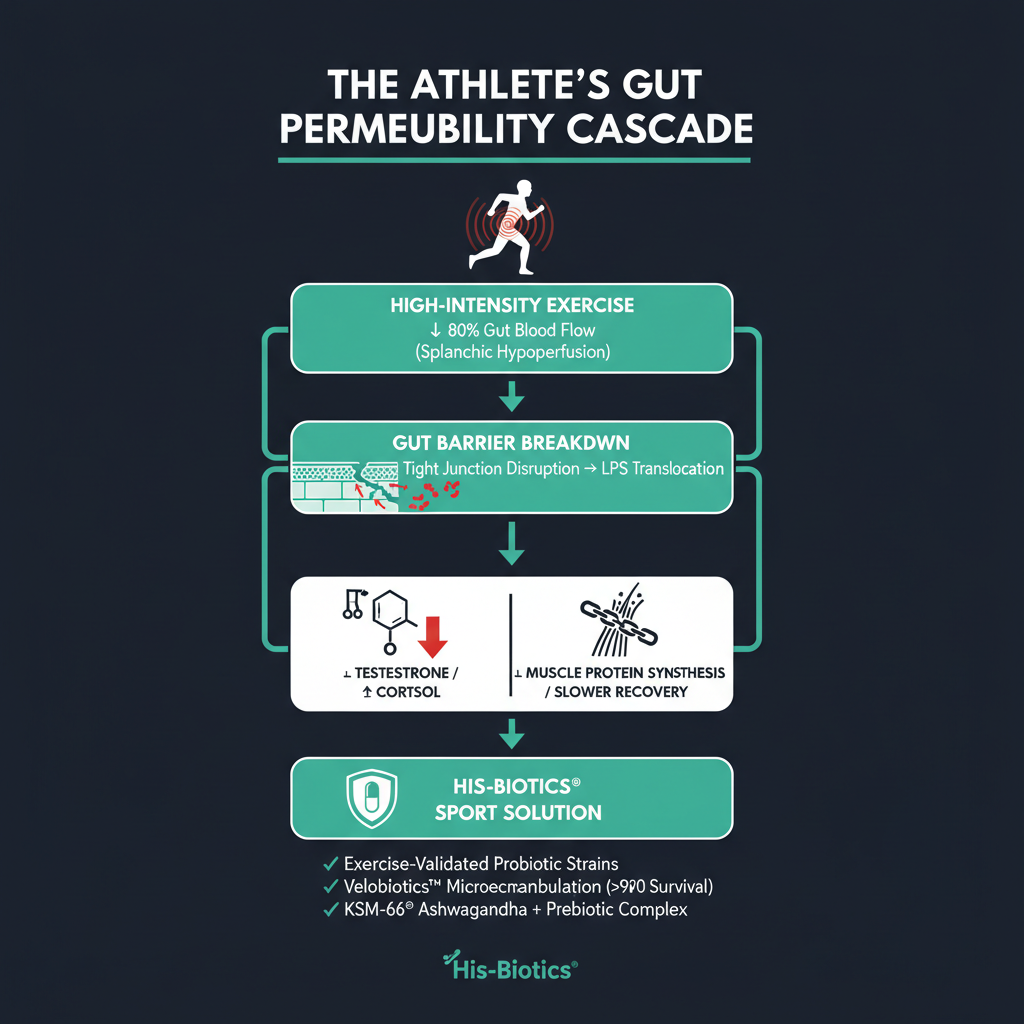
When you exercise at 70% or more of your VO₂ max, blood is shunted away from your splanchnic circulation — the network of vessels supplying your gut — and redirected toward working muscles, the heart, and the skin. This process, known as splanchnic hypoperfusion, can reduce gut blood flow by up to 80% during maximal effort. The result is ischaemia-reperfusion injury to the gut epithelium: a cascade of oxidative stress and inflammation that damages the tight junctions holding your intestinal cells together. Once those tight junctions loosen, the epithelial barrier becomes permeable to bacterial endotoxins, partially digested food antigens, and lipopolysaccharides (LPS) — molecules that have absolutely no business crossing into systemic circulation.
A landmark study published in the Alimentary Pharmacology & Therapeutics journal (2012) by Pals and colleagues demonstrated that endurance runners showed significantly elevated plasma LPS concentrations immediately post-race, correlating directly with markers of systemic inflammation including IL-6 and TNF-α. This is not just a gut problem — it is a whole-body inflammatory burden that impairs muscle protein synthesis, suppresses testosterone production, blunts immune function, and slows recovery. For men who are serious about their performance and their long-term health, understanding and addressing gut health for athletes is not optional; it is foundational.
The Gut-Performance Axis: More Than Just Digestion
The gut does far more for the athlete than simply absorb nutrients. It is the site of approximately 70% of your immune activity, a major producer of neurotransmitters including serotonin and GABA, and — crucially — a key regulator of systemic inflammation. The gut microbiome research emerging over the past decade has radically reframed how we think about athletic performance. Your microbiome influences everything from how efficiently you extract energy from carbohydrates, to how much short-chain fatty acid fuel is available for your colonocytes, to how rapidly you clear inflammatory cytokines after a hard session.
In male athletes specifically, the gut-testosterone axis deserves particular attention. Gut dysbiosis — an imbalance in the microbial ecosystem — has been linked to elevated cortisol-to-testosterone ratios, impaired androgen signalling, and reduced Leydig cell function. This is not speculative: a growing body of PubMed research on probiotics now supports the concept that targeted probiotic intervention can modulate the hypothalamic-pituitary-gonadal axis by reducing gut-derived inflammatory load and improving the metabolic environment for androgen production. When your gut is inflamed and permeable, your hormones pay the price — and so does your performance.
The microbiome also plays a direct role in body composition. Specific bacterial species, including Lactobacillus plantarum and Bifidobacterium longum, have been shown to influence the production of branched-chain amino acid (BCAA) precursors and regulate the expression of genes involved in skeletal muscle hypertrophy. A 2019 study in Nutrients by Jäger and colleagues — now considered a seminal paper in the sports microbiome field — found that probiotic supplementation significantly enhanced muscle protein synthesis markers and reduced exercise-induced muscle damage in resistance-trained men. This is the science underpinning why athletic performance gut optimisation has moved from the fringes to the forefront of sports medicine.
Creatine, BCAAs, and the Gut: What Nobody Is Telling You
Creatine monohydrate is arguably the most evidence-backed ergogenic supplement in existence. BCAAs — leucine, isoleucine, and valine — remain a staple of the peri-workout nutrition stack for millions of athletes globally. But here is what the labels do not tell you: the efficacy of both creatine and BCAAs is intimately dependent on gut barrier integrity, and high doses of each can, in certain individuals, exacerbate the very gut permeability they were never designed to address. Understanding creatine gut health and the relationship between BCAA probiotics is a clinical frontier worth exploring carefully.
Creatine is transported across the gut epithelium via the SLC6A8 creatine transporter, expressed abundantly in intestinal enterocytes. When gut permeability is elevated — as it reliably is post-intense exercise — this transporter's efficiency is compromised. Moreover, unabsorbed creatine in the colon is converted by bacteria to creatinine and other metabolites, a process that can alter the colonic pH and shift microbial populations in ways that are not always favourable. Loading protocols involving 20g/day have frequently been associated with gastrointestinal distress precisely because of this dynamic. Pairing creatine supplementation with a targeted probiotic formula can help restore barrier integrity, improve transporter efficiency, and reduce the osmotic load that causes bloating and cramping.
BCAAs present a related but distinct challenge. Leucine, in particular, is a potent activator of mTORC1 — the master regulator of muscle protein synthesis. However, the conversion of BCAAs in the gut is partly microbiome-dependent: certain bacterial species catabolise BCAAs before they even reach systemic circulation, effectively reducing bioavailability. Dysbiotic gut flora has been shown to over-catabolise leucine, blunting the anabolic signal athletes are paying for. Conversely, a robust, well-balanced microbiome — particularly one enriched with L. plantarum TWK10, a strain with specific evidence for BCAA metabolism modulation — can meaningfully improve leucine bioavailability and downstream mTOR activation. This is the evidence base behind the BCAA and probiotics synergy at the core of our His-Biotics® Sport formulation.
Key Nutrients and Their Gut-Microbiome Interactions
- Creatine Monohydrate: Dependent on SLC6A8 transporter integrity; high-dose loading can dysregulate colonic microbiota; probiotic co-supplementation improves uptake and reduces GI side effects.
- Leucine (BCAA): mTORC1 activator; bioavailability is microbiome-dependent; dysbiotic flora over-catabolises leucine before systemic absorption.
- L-Glutamine: Primary fuel for enterocytes; supports tight junction proteins (claudin-1, occludin); depleted rapidly during endurance exercise.
- Whey Protein: Can be pro-inflammatory in the context of increased gut permeability; microbiome composition influences hydrolysis and peptide absorption.
- Omega-3 Fatty Acids: Reduce LPS-triggered NF-κB signalling; synergise with probiotic strains to reduce post-exercise inflammatory burden.
Sports Probiotics: The Science Behind Strain Selection
Not all probiotics are created equal, and nowhere is this more true than in the context of athletic performance. The consumer probiotic market is saturated with generic multi-strain formulas designed for general digestive wellness — adequate, perhaps, for the sedentary population, but woefully underpowered for the demands of a hard-training male athlete. Sports probiotics — a term I use deliberately and specifically — refers to clinically selected, exercise-validated probiotic strains dosed at meaningful colony-forming unit (CFU) counts and, critically, delivered via technology that ensures they survive the hostile acidic environment of the stomach.
The strains that matter most for exercise recovery probiotics have been validated in sport-specific or exercise-focused human trials. Lactobacillus plantarum TWK10 has been shown in a 2016 randomised controlled trial published in Nutrients (Chen et al.) to significantly increase muscle mass, grip strength, and exercise performance in male subjects relative to placebo — effects attributed to improved BCAA metabolism and enhanced mitochondrial biogenesis. Bacillus coagulans MTCC 5856 has demonstrated clinically meaningful reductions in delayed onset muscle soreness (DOMS) and creatine kinase levels post-exercise, indicating genuine protection of the muscle membrane. Bifidobacterium breve BR03 has been validated in endurance athletes for its ability to reduce LPS translocation across the gut barrier during prolonged exercise — directly addressing the mechanism of exercise-induced permeability.
Delivery technology is equally critical and is where most sports supplement companies fall catastrophically short. A probiotic strain with extraordinary in-vitro evidence is worthless if it arrives at the distal ileum as a collection of dead bacteria. At Velobiotics™, our proprietary microencapsulation technology encases each probiotic strain in a protective lipid and polymer matrix, shielding viable bacteria from gastric acid (pH 1.5–3.5), bile salts, and pancreatic enzymes. Independent viability testing demonstrates that our encapsulated strains achieve greater than 90% survival to the small intestine — compared to industry averages of 10–30% for unencapsulated capsule formats. This is not a marginal improvement; it is the difference between a supplement that works and an expensive placebo.
What to Look for in a Sport-Specific Probiotic Formula
- Exercise-validated strains — Look for strains with human RCT data in athletic or high-activity populations, not just in-vitro or animal studies.
- Effective CFU dosing — Minimum 10 billion CFU per serving; some exercise-specific strains require 20–50 billion CFU for measurable effect.
- Survivability technology — Microencapsulation, acid-resistant capsules, or spore-form strains (e.g., Bacillus coagulans) that resist gastric degradation.
- Adaptogenic co-factors — The best formulations include compounds like KSM-66® Ashwagandha, whose clinical studies on KSM-66® Ashwagandha confirm meaningful reductions in cortisol and improvements in VO₂ max alongside probiotic activity.
- Prebiotic substrate — Inulin, FOS, or XOS prebiotics feed the probiotic strains once delivered, amplifying colonisation and clinical effect.
- Third-party testing — Non-negotiable for serious athletes, particularly those subject to anti-doping regulations.
His-Biotics® Sport: Built for the Way Men Train
His-Biotics® Sport is our clinical-grade athletic performance formula, designed from the ground up for men who train seriously and refuse to compromise on recovery. Every element of its formulation reflects the evidence base outlined in this article: exercise-validated probiotic strains at therapeutic doses, delivered via Velobiotics™ microencapsulation technology, combined with complementary micronutrients and adaptogens that address the full cascade of exercise-induced gut permeability and its systemic consequences. This is not a bolted-on probiotic afterthought — it is a performance-engineering decision made at every stage of formulation.
The formula centres on a multi-strain sports probiotic complex anchored by L. plantarum TWK10 for muscle performance and BCAA metabolism, Bacillus coagulans MTCC 5856 for DOMS reduction and gut barrier support, and Bifidobacterium breve BR03 for LPS attenuation during intense training blocks. These are paired with KSM-66® Ashwagandha — the most clinically studied ashwagandha extract in the world — which works in concert with the probiotic complex to modulate the cortisol response to training stress, support testosterone levels, and improve both aerobic capacity and anaerobic power output. Together, these ingredients address the gut-hormone-performance axis at multiple mechanistic points simultaneously.
What I find most compelling in clinical practice — and what men consistently report back to me — is the compounding effect that emerges at around the four-to-six-week mark of consistent supplementation. Initial benefits are often digestive: reduced bloating during training, better tolerance of creatine and protein loads, more regular GI function under high training volumes. But by weeks four to six, the systemic signals become apparent: improved sleep quality (gut-derived serotonin and GABA regulation), faster DOMS resolution, more stable energy across training days, and subjective improvements in mood and drive that map directly onto the testosterone and cortisol modulation we expect from the formula. You can His-Biotics® Sport and read the full formulation breakdown on our product page.
If you are looking to understand how sport-specific gut optimisation fits into a broader daily protocol — from morning routine to sleep support — I also recommend exploring the Morning Man Protocol, our structured guide to sequencing supplementation around the male circadian and training cycle for maximum hormonal and performance benefit. And if you are not yet sure which His-Biotics® formula is the right fit for your training style and health goals, take two minutes to explore our athlete formula range and find the product built specifically for where you are right now.
Key Takeaways
If you take nothing else from this article, let it be these six points. They represent the clinical and scientific core of everything I have outlined above, distilled into actionable clarity:
- Exercise-induced gut permeability is universal at high training intensities — Splanchnic hypoperfusion during hard training reliably compromises tight junction integrity, allowing LPS and endotoxins into systemic circulation and triggering the inflammatory cascade that stalls recovery.
- Leaky gut in athletes is a hormonal and recovery issue, not just a digestive one — Gut-derived LPS suppresses testosterone, elevates cortisol, impairs muscle protein synthesis, and blunts immune function — all of which compound over a training block if not addressed.
- Creatine and BCAA efficacy is microbiome-dependent — Gut dysbiosis reduces creatine transporter efficiency and over-catabolises leucine before it can activate mTORC1; pairing these supplements with a targeted sports probiotic is a mechanistically rational strategy, not a marketing one.
- Strain selection and survivability are everything in sports probiotics — Only exercise-validated strains dosed at therapeutic CFU levels and delivered via survivability technology (such as Velobiotics™ microencapsulation) will produce measurable athletic benefit.
- The gut-performance axis is addressable, systematically and quickly — Clinically meaningful improvements in barrier integrity, inflammation, and recovery markers are observable within two to four weeks of targeted probiotic intervention; body composition and hormonal shifts emerge at four to six weeks.
- Adaptogens and probiotics work synergistically — KSM-66® Ashwagandha combined with sport-specific probiotic strains targets the cortisol-testosterone ratio and gut barrier simultaneously, creating compounding performance benefits that neither ingredient achieves alone.
Ready to address your gut from the inside out? If this article has shifted how you think about recovery, inflammation, and the role your microbiome plays in everything from your creatine uptake to your testosterone levels, the next step is straightforward. His-Biotics® Sport was built for exactly the physiological reality described in this article — not as a wellness add-on, but as a clinical tool for men who train hard and expect their bodies to respond. Visit our product page for the full evidence-based formulation breakdown, or take our gut health quiz to get a personalised recommendation. Your gut is not separate from your performance. It is your performance.
— Dr. Chomba Chuma, MD & Founder, His-Biotics® by Velobiotics™