Why Elite Athletes Have Leaky Guts
There is a paradox sitting at the heart of high-performance sport that most coaches, nutritionists, and even clinicians overlook: the very training that builds elite physiques simultaneously degrades one of the body's most critical protective barriers — the intestinal epithelium. Exercise-induced gut permeability, colloquially known as leaky gut in athletes, is not a fringe concept or wellness industry hyperbole. It is a well-documented, reproducible physiological phenomenon with direct consequences for recovery, body composition, hormonal output, and long-term performance. As a clinician who has spent years studying the intersection of the male gut microbiome and performance medicine, I can tell you this is one of the most underappreciated variables in the athletic optimization conversation.
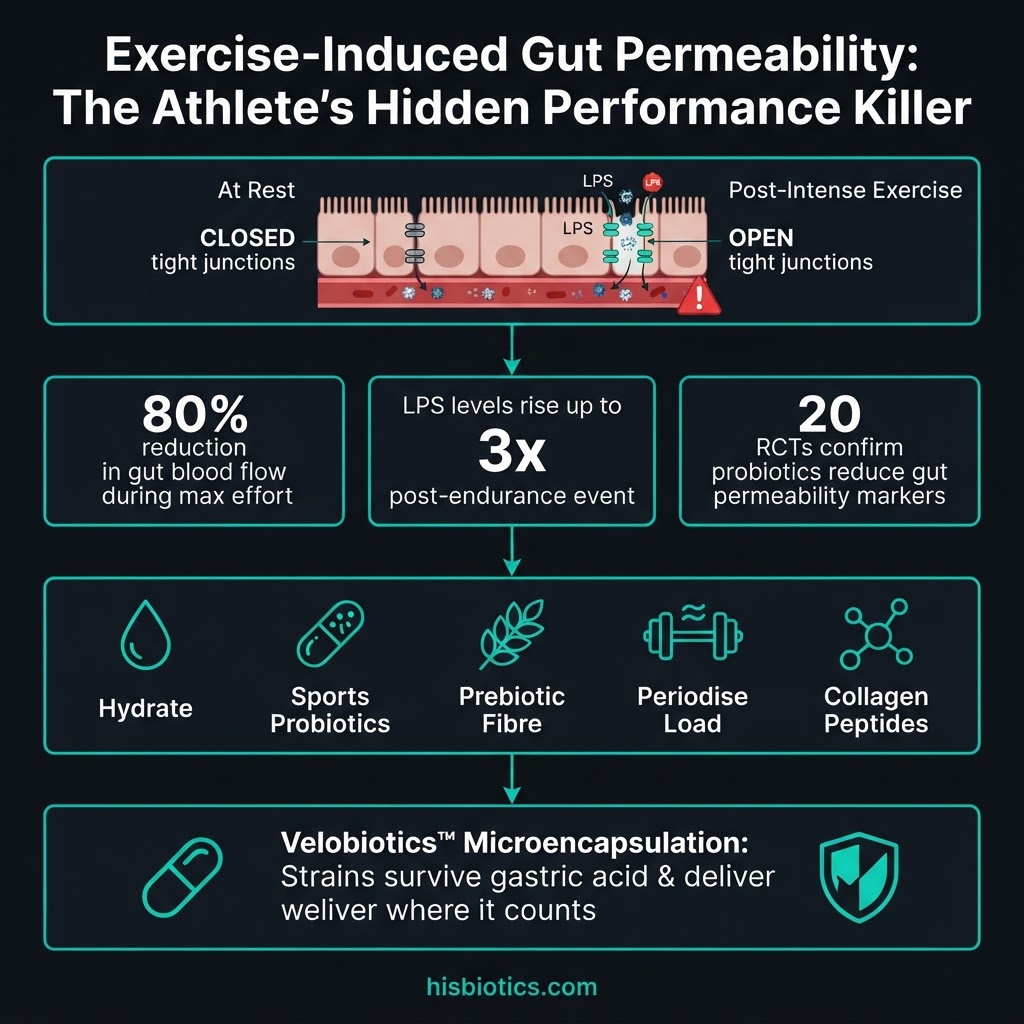
During intense or prolonged exercise, blood is rapidly redirected away from the gastrointestinal tract and toward working muscles, the heart, and the lungs — a process called splanchnic hypoperfusion. The gut can lose up to 80% of its resting blood flow during maximal effort. This ischaemia triggers a cascade of cellular stress, oxidative damage, and inflammatory signalling that physically widens the tight junctions between enterocytes — the cells that line your intestinal wall. Once those tight junctions open, bacterial endotoxins, undigested proteins, and inflammatory compounds can translocate into systemic circulation. The immune system mounts a response, cortisol rises, recovery slows, and testosterone signalling is suppressed. This is not a theory. This is measurable biochemistry.
A landmark study published in the Alimentary Pharmacology & Therapeutics journal (Costa et al., 2017) demonstrated that gut permeability markers — specifically intestinal fatty acid binding protein (I-FABP) and lipopolysaccharide (LPS) — were significantly elevated in endurance athletes following competition compared to sedentary controls. Elevated LPS in circulation is directly associated with systemic inflammation, immune suppression, and impaired anabolic signalling. In other words, your gut's structural compromise after a hard training block is measurably undermining the hormonal environment you need to recover and grow. The research emerging from gut microbiome research continues to confirm that gut architecture and microbial diversity are not peripheral concerns for athletes — they are central ones.
The Supplement Stack That Secretly Stresses Your Gut
Here is where the situation becomes particularly relevant for the performance-focused male. Most serious athletes are already consuming a stack of supplements designed to amplify training adaptations — creatine monohydrate, branched-chain amino acids (BCAAs), pre-workouts laden with stimulants and artificial sweeteners, and protein powders often derived from whey or soy. What is rarely discussed is how each of these compounds interacts with the gut environment, especially one that is already compromised by exercise-induced permeability.
Creatine and Gut Health
Creatine monohydrate is one of the most researched ergogenic aids in existence and, used correctly, it is genuinely effective for increasing phosphocreatine availability in muscle tissue. However, creatine gut health is a topic that receives insufficient attention. High-dose creatine loading protocols — the traditional 20g/day for 5–7 days — are associated with gastrointestinal distress in a meaningful proportion of users, including bloating, osmotic diarrhoea, and cramping. The mechanism is partly osmotic: creatine draws water into the intestinal lumen, disrupting the mucosal environment. In an already-inflamed gut post-exercise, this additional osmotic stress can further impair mucosal integrity and alter microbial composition in ways that are not conducive to recovery. Emerging data suggests that maintaining a robust microbiome prior to creatine use may buffer some of these effects and optimise creatine's uptake and utilisation at the cellular level.
BCAAs and the Gut Microbiome
Branched-chain amino acids — leucine, isoleucine, and valine — are widely consumed for their role in stimulating muscle protein synthesis via mTOR activation. The BCAA probiotics connection is a newer but growing area of investigation. A 2021 study published in Frontiers in Nutrition (Zhao et al., 2021) found that high-dose BCAA supplementation altered the gut microbiota composition in rodent models, reducing microbial diversity and increasing the ratio of Firmicutes to Bacteroidetes — a ratio associated with dysbiosis, increased intestinal permeability, and systemic inflammation. While human data is still accumulating, these findings raise a clinically relevant question: are the BCAAs in your shaker bottle inadvertently worsening the gut environment they depend on to be absorbed efficiently? The bioavailability of amino acids is entirely dependent on the integrity of the intestinal epithelium. A leaky, dysbiotic gut is a less efficient amino acid absorber — meaning your BCAA investment may be returning diminishing yields.
The Science of Sports Probiotics for Athletic Recovery
This is where the conversation shifts from problem to solution — and where the evidence is increasingly compelling. Sports probiotics represent a targeted, strain-specific intervention designed not merely for digestive comfort, but for the structural and functional restoration of a gut environment under the unique stresses of athletic training. The notion that a probiotic is simply a probiotic — that a generic Lactobacillus acidophilus capsule from the supermarket shelf will meaningfully support a competitive athlete — reflects a fundamental misunderstanding of microbial specificity and strain-level functionality.
The strains that matter for gut health athletes are those with demonstrated capacity to: reinforce tight junction proteins (specifically occludin and zonulin), modulate inflammatory cytokine profiles post-exercise, produce short-chain fatty acids (SCFAs) that fuel colonocyte repair, and enhance mucosal immunoglobulin A (sIgA) secretion to maintain immune defence at the gut barrier. A 2019 meta-analysis published in the Journal of the International Society of Sports Nutrition (Jäger et al., 2019) reviewed 20 randomised controlled trials and concluded that probiotic supplementation significantly reduced upper respiratory tract infection incidence in athletes, improved gut permeability markers, and enhanced recovery from exercise-induced muscle damage — outcomes directly relevant to training consistency and adaptation. You can explore the broader body of evidence, including PubMed research on probiotics and testosterone, to understand just how far-reaching these microbial effects are.
Exercise recovery probiotics work through several interconnected mechanisms. First, by reducing the translocation of LPS across a compromised gut wall, they lower the systemic inflammatory burden that would otherwise suppress IGF-1 and testosterone signalling. Second, by producing butyrate and other SCFAs, they provide direct energy substrate to enterocytes, accelerating mucosal repair between training sessions. Third, specific strains — particularly Lactobacillus plantarum and Bifidobacterium longum — have been shown to modulate the gut-brain axis, reducing perceived fatigue and improving subjective wellbeing scores in athletes undergoing heavy training blocks. This is not supplementary support. This is foundational biochemistry.
What Makes His-Biotics® Sport Different
Not all probiotics survive long enough to do their job. This is a critical and frequently glossed-over limitation of the probiotic market at large. Most commercially available strains are fragile — they are vulnerable to gastric acid, bile salts, heat, and moisture. By the time a standard probiotic capsule reaches the distal ileum and colon, viable cell counts are often a fraction of what is declared on the label. The formulation technology used to deliver a probiotic is as important as the strains selected, and this is where Velobiotics™ proprietary microencapsulation technology changes the equation fundamentally.
The microencapsulation process used in all Velobiotics™ formulations surrounds each bacterial strain in a protective lipid matrix that shields it from gastric acid degradation and ensures targeted, timed release in the intestinal environment where the strains exert their effect. Independent viability testing confirms that Velobiotics™ microencapsulated strains demonstrate survival rates significantly superior to conventional uncoated probiotic preparations — meaning the CFU count on the label is the count arriving at your gut, not disappearing in your stomach. This matters enormously for the athlete who needs consistent, predictable results from their supplement protocol.
His-Biotics® Sport is formulated specifically around the physiological demands of the training male. The strain selection targets exercise-induced gut permeability, post-workout inflammatory modulation, and the specific microbiome disruptions associated with high-protein, high-intensity training lifestyles. The formula also incorporates KSM-66® Ashwagandha — a root extract with an extensive body of clinical evidence supporting cortisol reduction, testosterone support, and exercise recovery. The clinical studies on KSM-66® Ashwagandha consistently demonstrate improvements in VO₂ max, muscle recovery time, and anabolic hormone profiles in trained males — making it a natural and evidence-backed companion to the probiotic core of this formula. This is a synergistic formulation, not a scattergun approach, and you can explore our athlete formula in full to see exactly what is in it and why.
Practical Strategies: Protecting Your Gut During Heavy Training
Beyond supplementation, there are modifiable behavioural and nutritional factors that meaningfully influence exercise-induced gut permeability. Optimising these alongside a targeted probiotic protocol is the difference between marginal gains and genuine physiological transformation. I work with athletes across a wide spectrum of disciplines, and the gut-performance connection consistently emerges as one of the most impactful — and most neglected — levers available to them.
Consider the following evidence-informed strategies as the structural framework around which your probiotic and supplement protocol should sit:
- Hydration before and during training: Even mild dehydration (2% body weight loss) significantly exacerbates splanchnic hypoperfusion during exercise, deepening the ischaemic insult to the intestinal epithelium. Prioritise pre-training hydration and include sodium to support fluid retention in the gut lumen.
- Avoid NSAIDs pre-exercise: Non-steroidal anti-inflammatory drugs like ibuprofen independently increase gut permeability and, when combined with exercise-induced hypoperfusion, dramatically amplify mucosal damage. Despite being widely used by athletes, the evidence against their pre-exercise use is unambiguous.
- Time your creatine sensibly: If you experience GI distress with creatine, abandon loading protocols entirely. A maintenance dose of 3–5g daily, taken post-workout with food and away from your probiotic (allow at least 30 minutes separation), achieves full saturation without the osmotic stress of loading phases.
- Prioritise prebiotic fibre: Diverse dietary fibre intake — from sources like chicory root, green banana, and Jerusalem artichoke — provides the fermentable substrate your probiotic strains need to produce SCFAs and maintain colonisation. A probiotic without adequate prebiotic support is an investment without infrastructure.
- Manage training load periodisation: Unmanaged training volume is among the most consistent triggers of chronic gut permeability. Structured deload weeks are not optional recovery luxuries — they are essential windows during which the gut epithelium repairs. Treat them with the same discipline as your heaviest training sessions.
- Introduce collagen peptides strategically: Glycine-rich collagen peptides support the synthesis of tight junction proteins and intestinal mucus layer integrity. 10–15g of hydrolysed collagen consumed daily, particularly in the post-workout window, provides structural substrate for mucosal repair that amino acid supplements alone do not fully address.
The Gut-Testosterone Axis: Why Your Microbiome Is a Hormonal Organ
The conversation about athletic performance gut health would be incomplete without addressing what is arguably the most impactful downstream consequence of gut dysbiosis for the male athlete: hormonal disruption. The gut microbiome is not simply a digestive organ. It is an endocrine organ. Specific microbial communities regulate the enterohepatic recirculation of testosterone and oestrogen, modulate the hypothalamic-pituitary-adrenal axis, and influence systemic cortisol through vagal nerve signalling and SCFAs acting on enteroendocrine cells. When this microbial community is disrupted — through exercise-induced permeability, dysbiosis, or antibiotic exposure — the hormonal consequences are real and measurable.
Elevated LPS-driven systemic inflammation suppresses Leydig cell function directly, reducing testicular testosterone production at the source. Simultaneously, a dysbiotic gut with elevated beta-glucuronidase activity — an enzyme produced by certain bacterial species — impairs the deconjugation and elimination of oestrogen metabolites, effectively raising the oestrogen burden in circulation. For the male athlete, this manifests as reduced training drive, suboptimal body composition responses, impaired sleep quality, and slower recovery timelines. These are not subtle effects. They are the difference between an athlete expressing his genetic potential and one chronically underperforming relative to the effort invested. The Morning Man Protocol at His-Biotics® was developed precisely to address this hormonal cascade through a structured, gut-first approach to male performance optimisation.
Addressing the gut-testosterone axis through targeted probiotic supplementation, strategic nutritional support, and training load management creates a positive feedback loop: better gut integrity reduces LPS translocation, which reduces systemic inflammation, which supports healthier testosterone signalling, which enhances recovery, which enables better training adaptations, which — when managed correctly — produces less severe gut permeability events over time. The gut is not the end of the performance conversation. It is the beginning.
Key Takeaways
- Exercise-induced gut permeability is real and measurable: Intense training diverts blood away from the gut, physically opening tight junctions and allowing endotoxins into systemic circulation — directly suppressing recovery and anabolic hormone signalling.
- Your supplement stack may be compounding the problem: High-dose creatine loading and excessive BCAA supplementation can alter microbial composition and osmotic balance in an already-stressed gut, reducing the absorptive efficiency of the very nutrients you are trying to deliver.
- Strain-specific sports probiotics are evidence-backed: Randomised controlled trials confirm that targeted probiotic supplementation reduces gut permeability markers, lowers inflammatory burden post-exercise, and improves both immune resilience and recovery speed in trained athletes.
- Delivery technology determines efficacy: Velobiotics™ microencapsulation ensures that probiotic strains survive gastric transit and reach the intestinal environment intact — a non-negotiable requirement for clinical-level results in athletes with high physiological demands.
- The gut is a hormonal organ: Dysbiosis-driven LPS translocation directly suppresses testosterone production and impairs oestrogen elimination — making gut health inseparable from hormonal optimisation and body composition outcomes in male athletes.
- Gut protection is a performance strategy, not an afterthought: Hydration, NSAID avoidance, prebiotic fibre, periodised training load, and targeted probiotics form a comprehensive framework for maintaining gut integrity as a performance foundation — not a secondary concern.
If you are training hard and not accounting for what that training does to your gut, you are leaving performance on the table — potentially a great deal of it. The evidence is clear, the mechanisms are understood, and the solutions are available. His-Biotics® Sport was formulated for exactly this challenge: the high-output male athlete who demands that every element of his physiology is working in concert, not against itself. Take the His-Biotics® Total Gut Score quiz to identify your specific gut-performance gaps, or go directly to the product page to review the full strain profile, dosing rationale, and clinical evidence behind the formula. Your gut built every muscle you have. It is time to build your gut back.
— Dr. Chomba Chuma, MD & Founder, His-Biotics® by Velobiotics™