The Athlete's Hidden Weak Link: Your Gut Under Fire
You train hard, eat clean, and sleep with military precision — yet your recovery is sluggish, your energy unpredictable, and your physique refuses to respond the way it should. Before you blame your programming or your macros, I want you to consider something most coaches and even most clinicians overlook: your gut lining may be failing you. As a clinician who has worked with competitive athletes and high-performance men for years, I can tell you with confidence that exercise-induced gut permeability — what researchers informally call "leaky gut in athletes" — is one of the most underdiagnosed barriers to peak performance, and it sits squarely at the intersection of gut health athletes cannot afford to ignore.
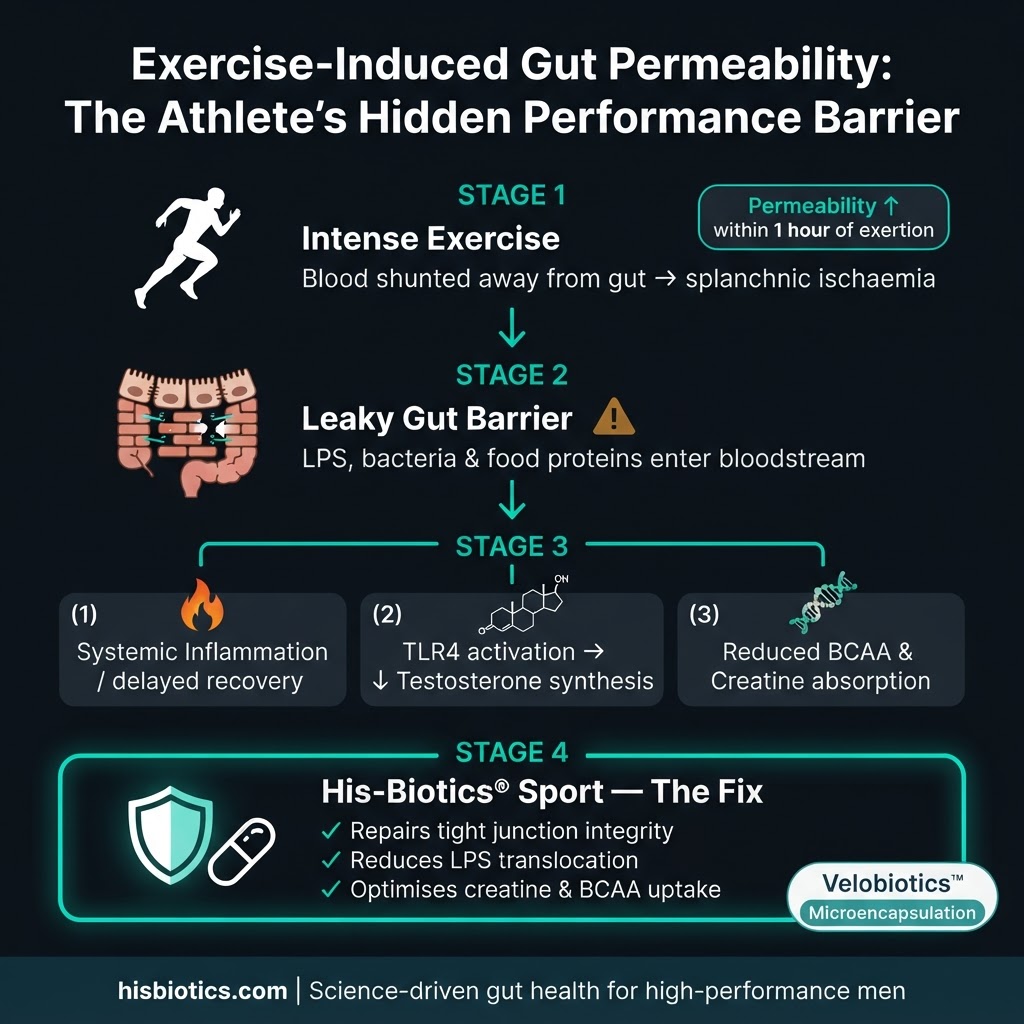
When you push hard in the gym or on the track, blood is shunted away from your digestive system and directed to your working muscles. This is entirely normal physiology. The problem arises when training volume, intensity, or environmental heat tips this process past a critical threshold, causing the tight junction proteins that hold your intestinal wall cells together to literally loosen. Bacteria, lipopolysaccharides (LPS), and undigested food proteins begin to leak into systemic circulation — triggering a low-grade inflammatory cascade that sabotages the very adaptations you trained so hard to earn. This isn't fringe science; a landmark study published in Alimentary Pharmacology & Therapeutics (2012) demonstrated that intense endurance exercise causes a measurable, dose-dependent increase in intestinal permeability within hours of a single bout of exertion. The implications for strength and conditioning athletes are equally significant and largely ignored.
What makes this particularly insidious is that the symptoms are easy to misattribute. Bloating after your post-workout shake, brain fog that lingers into the afternoon, joints that feel inexplicably inflamed three days after a heavy squat session, or a testosterone profile that has flatlined despite doing everything "right" — these can all trace their origins, at least in part, back to a compromised gut barrier. The good news is that the gut is extraordinarily plastic. With the right nutritional and microbiome strategy, you can repair and reinforce that barrier, restoring the foundation upon which every other performance variable is built. That is precisely what His-Biotics® Sport was designed to address.
Creatine, BCAAs, and Your Gut: A Relationship Nobody Is Talking About
Creatine monohydrate and branched-chain amino acids (BCAAs) are the two most popular sports supplements on the planet, and for good reason — the evidence for their efficacy in supporting muscle power output, reducing exercise-induced muscle damage, and accelerating protein synthesis is robust. But here is what the marketing copy never tells you: both of these compounds interact directly with your gut microbiome, and the quality of that interaction determines how much benefit you actually extract from them. Understanding creatine gut health and BCAA probiotics synergies is no longer optional for the performance-focused man — it is foundational.
Creatine is absorbed primarily in the small intestine via the SLC6A8 transporter. When gut permeability is elevated — as we have established is common in hard-training athletes — this transporter's efficiency is compromised, and a larger proportion of your creatine dose passes unabsorbed into the colon, where it becomes substrate for bacterial fermentation. The result: bloating, cramping, and the notorious GI distress that leads many men to abandon creatine prematurely. Critically, certain probiotic strains, particularly Lactobacillus helveticus and Bifidobacterium longum, have been shown to support tight junction integrity, which in turn enhances transporter-mediated nutrient absorption. In practical terms, a well-targeted probiotic stack doesn't just help your gut — it helps your creatine work better.
The story with BCAAs is equally compelling. Leucine, isoleucine, and valine are not passively absorbed; they depend on competitive transport mechanisms that are profoundly influenced by gut microbiome composition. A 2019 review in Nutrients highlighted that dysbiotic gut communities — those skewed toward inflammatory, LPS-producing species — actively compete for BCAA uptake and alter hepatic amino acid metabolism, reducing the anabolic signal leucine is supposed to deliver to mTORC1. Conversely, a microbiome enriched with short-chain fatty acid (SCFA)-producing species, such as those found in targeted sports probiotic formulations, reinforces the gut epithelium and creates the biochemical environment in which BCAA absorption and utilisation are optimised. The synergy is real, measurable, and clinically actionable — and it is one of the core reasons we built a dedicated athlete formula rather than simply recommending a generic probiotic off a pharmacy shelf.
The Science of Sports Probiotics: Strains, Timing, and What the Research Actually Shows
Not all probiotics are created equal, and nowhere is this truer than in the context of athletic performance. The term "sports probiotics" refers to a category of evidence-selected bacterial strains that have been specifically studied in the context of exercise physiology — strains capable of modulating gut barrier function, immune tone, inflammation, and even hormonal signalling in ways that directly benefit the training athlete. The broader landscape of gut microbiome research has expanded dramatically over the past decade, and we are now at a point where clinically meaningful strain-specific recommendations can be made with confidence.
One of the most compelling strains in this space is Lactobacillus plantarum PS128, which has demonstrated the ability to reduce systemic inflammation markers — including TNF-α and IL-6 — in exercising subjects, while simultaneously improving mood, sleep quality, and recovery-related wellbeing scores. A randomised, double-blind trial published in Frontiers in Nutrition (2019) showed that athletes supplementing with L. plantarum experienced significantly reduced creatine kinase levels — a biomarker of muscle damage — following eccentric exercise compared to placebo. This is not a minor finding. Reduced muscle damage means faster recovery, which means you can train harder, more frequently, and with greater cumulative adaptation over time. Lactobacillus rhamnosus GG has similarly been shown to reduce the incidence of upper respiratory tract infections in athletes during heavy training blocks — a period when immune suppression is well-documented and can derail entire competitive seasons.
Beyond individual strains, the architecture of the formula matters enormously. A multi-strain product that combines gut barrier-reinforcing species with immune-modulating and anti-inflammatory strains, delivered via a technology that ensures viable bacteria actually reach the target site, will always outperform a single-strain product or one that degrades in stomach acid before it can do anything useful. This is why the Velobiotics™ microencapsulation technology underpinning His-Biotics® Sport is not a marketing feature — it is a functional requirement. Each probiotic strain is individually coated in a protective lipid matrix that shields it from gastric acid and bile salt degradation, ensuring ≥90% survivability to the distal small intestine and colon where the therapeutic action occurs. The emerging PubMed research on probiotics increasingly validates this approach, with delivery-optimised formulations consistently outperforming standard encapsulation in clinical endpoints.
How Gut Permeability Derails Hormonal Health — and Why Testosterone Is at Stake
Here is the conversation I find myself having with athletes more often than any other: training is dialled in, nutrition is solid, sleep is consistent — but testosterone is low, cortisol is chronically elevated, and the man feels like he is perpetually running on empty. When I dig deeper into the clinical picture, gut health is almost always part of the story. The gut-hormone axis is bidirectional and exquisitely sensitive, and exercise-induced gut permeability sits at a critical nexus in this system that the conventional sports medicine world is only beginning to appreciate.
When bacterial lipopolysaccharides leak through a compromised intestinal barrier into systemic circulation, they bind to Toll-like receptor 4 (TLR4) on Leydig cells in the testes — the very cells responsible for testosterone synthesis. Activation of TLR4 suppresses the StAR protein (steroidogenic acute regulatory protein), which transports cholesterol into the mitochondria as the rate-limiting step of testosterone production. In plain language: a leaky gut can directly suppress your body's ability to make testosterone at the cellular level. This is not a theoretical concern; it is a mechanistically validated pathway, and it is one reason why addressing gut permeability is a foundational strategy in my clinical approach to hormonal optimisation in active men.
Cortisol, the principal stress hormone, also plays a role here. Systemic LPS translocation drives hypothalamic-pituitary-adrenal (HPA) axis activation, keeping cortisol elevated beyond what training stress alone would produce. Chronically elevated cortisol competes directly with testosterone at the receptor level and accelerates muscle protein catabolism — undoing the very adaptations your training is designed to create. This is where the adaptogenic dimension of the Morning Man Protocol integrates powerfully with gut-targeted intervention: addressing both the upstream hormonal dysregulation and the gut barrier dysfunction simultaneously creates a compounding effect that is clinically superior to addressing either in isolation. The clinical studies on KSM-66® Ashwagandha — an ingredient in our broader Velobiotics™ ecosystem — demonstrate statistically significant reductions in cortisol and improvements in testosterone-to-cortisol ratio, an effect that is magnified when the gut barrier is simultaneously being repaired and reinforced.
Rebuilding the Gut Barrier: A Practical Protocol for Training Athletes
Understanding the problem is step one. Having a structured, evidence-based protocol to act on that understanding is step two — and it is where most athletes are left without adequate guidance. Over years of clinical practice and working with men at every level of athletic endeavour, I have refined a practical framework for gut barrier restoration that integrates seamlessly with an existing training and nutrition plan. It is not complicated, but it does require consistency and specificity.
Nutritional Foundations for Gut Integrity
The gut lining regenerates rapidly — turnover of intestinal epithelial cells occurs every three to five days — which means dietary choices have near-immediate consequences for barrier health. Prioritising fermentable fibre from diverse plant sources feeds the SCFA-producing bacteria that are the primary fuel source for colonocytes (the cells of your gut lining). Glutamine, found in animal proteins and supplemental form, is the principal energetic substrate for enterocytes and has been shown in multiple clinical trials to reduce exercise-induced intestinal permeability markers when dosed at 0.5g/kg/day during heavy training blocks. Polyphenol-rich foods — berries, dark chocolate, green tea, olive oil — exert prebiotic effects that selectively support beneficial gut species while suppressing inflammatory ones.
Training Modifications That Protect the Gut
No supplement protocol can fully compensate for training loads that chronically overwhelm gut barrier capacity. Practical modifications that reduce exercise-induced permeability without sacrificing adaptation include adequate pre-workout hydration (gut permeability increases significantly when training commences in a hypohydrated state), avoiding high-intensity training in extreme heat without acclimatisation, and managing total weekly training load with appropriate periodisation. Intra-workout carbohydrate consumption has also been shown to attenuate gut permeability during prolonged exercise by maintaining splanchnic blood flow — another reason why the "fasted cardio is superior" narrative deserves nuance for high-volume athletes.
Targeted Supplementation: The Non-Negotiables
- Multi-strain, delivery-optimised sports probiotic: Select a formulation validated for athletic use, with strains including L. plantarum, L. rhamnosus, and B. longum, delivered via microencapsulation technology that guarantees gut arrival. This is the core of the protocol and the rationale behind His-Biotics® Sport.
- Creatine monohydrate (3–5g/day): Take consistently with a gut-protective probiotic to optimise small intestinal absorption and eliminate GI side effects that most men attribute to creatine itself but are actually a function of poor gut barrier status.
- BCAA or EAA supplement (5–10g peri-workout): Maximise leucine-driven mTORC1 signalling by ensuring the gut microbiome environment supports competitive transporter function — again, contingent on probiotic-supported barrier integrity.
- Glutamine (5g post-workout): Direct fuel for enterocyte repair, particularly valuable in the 60-minute post-exercise window when gut permeability is at its peak.
- Zinc and Vitamin D3: Both are critical cofactors in tight junction protein synthesis. Deficiency in either — extremely common in hard-training men — impairs barrier repair regardless of other interventions.
- Prebiotic fibre (5–10g/day): Feeds the SCFA-producing species supported by your probiotic, creating a self-reinforcing cycle of barrier repair and microbiome enrichment.
His-Biotics® Sport: Engineered for the Athlete's Gut
His-Biotics® Sport is not a probiotic that happened to be marketed towards athletes. It is a formula built from the ground up around the specific physiological demands that intensive training places on the male gut-microbiome. Every strain was selected based on peer-reviewed evidence in exercise science, not general gut health literature alone — because the two, while overlapping, are not identical. The formula addresses gut barrier integrity, exercise-induced inflammation, immune resilience during heavy training, and the specific absorption dynamics of the performance supplements — creatine, BCAAs, protein — that serious athletes depend on.
The Velobiotics™ microencapsulation technology ensures that every colony-forming unit declared on the label is a colony-forming unit that actually reaches your gut — not a casualty of stomach acid or the transit time between a warehouse shelf and your intestine. This is a distinction that matters enormously when the research literature is parsed carefully: the majority of positive clinical outcomes from exercise recovery probiotics are seen in trials using delivery-optimised preparations, not standard enteric-coated or unprotected capsule formats. We built our technology around this evidence, not around cost optimisation.
His-Biotics® Sport also integrates intelligently with the wider Velobiotics™ ecosystem. Men who combine it with the broader framework outlined in the Morning Man Protocol report compounding benefits across energy, recovery, hormonal balance, and body composition that neither intervention produces in isolation to the same degree. This is systems medicine applied to athletic performance — and it is the philosophy that underpins everything we build at His-Biotics®.
The performance gap you are experiencing may not be a programming problem, a calorie problem, or a sleep problem. It may be a gut problem — and if it is, every other optimisation you are attempting is working at a fraction of its potential until that foundation is addressed. If you want to understand exactly where your athletic gut health stands and which specific combination of His-Biotics® products maps onto your individual physiology, I encourage you to explore our athlete formula and take our Total Gut Score™ quiz — a clinical decision tool I developed to match men to the right protocol based on their symptom profile, training demands, and health history.
Key Takeaways
- Exercise-induced gut permeability is real and measurable: Intense training — particularly endurance and high-volume resistance work — demonstrably loosens intestinal tight junctions, triggering systemic inflammation that directly impairs recovery, hormonal health, and performance.
- Your gut health determines how well creatine and BCAAs work: A compromised gut barrier reduces the absorption efficiency and anabolic signalling of both supplements; a probiotic-supported, intact barrier is the prerequisite for getting full return on your supplement investment.
- Strain specificity matters in sports probiotics: Evidence-backed strains such as L. plantarum, L. rhamnosus GG, and B. longum have demonstrated measurable reductions in muscle damage markers, inflammation, and immune suppression in exercising populations — generic probiotics cannot be assumed to confer the same benefits.
- Leaky gut suppresses testosterone at the cellular level: LPS translocation from a permeable gut directly inhibits Leydig cell testosterone synthesis via TLR4 activation — making gut barrier repair a legitimate hormonal optimisation strategy, not merely a digestive one.
- Delivery technology is not a marketing detail — it is a clinical requirement: Velobiotics™ microencapsulation ensures probiotic viability to the target site, which is the single most predictive variable of whether a probiotic produces a clinical outcome or simply passes through unused.
- Gut repair is fast when approached correctly: With the right probiotic formulation, nutritional co-factors, and training load management, meaningful improvement in gut barrier integrity is achievable within four to eight weeks — making this one of the highest-leverage, fastest-returning interventions in the athletic performance toolkit.