The Gut Nobody Talks About in the Gym
You track your macros, time your creatine, split your BCAAs across training windows, and still wonder why your recovery feels incomplete — why bloating follows hard sessions, why your energy crashes mid-week, and why despite doing everything right, performance plateaus. The answer, increasingly, lives not in your training programme but in your gut. Specifically, in what exercise science now calls exercise-induced gut permeability — a real, measurable, and reversible phenomenon that affects nearly every serious male athlete, yet receives almost no attention in mainstream sports nutrition.
As a clinician working at the intersection of male gut health and performance medicine, I've seen this pattern repeat itself hundreds of times. Men come to me with the training diaries of elite athletes and the gut health of someone in chronic stress. The two are not unrelated. The harder you train, the more you demand of your gastrointestinal tract — and without deliberate support, that demand creates systemic consequences that blunt hormonal output, slow muscle repair, and undermine the very adaptations you're training for. Understanding this relationship is, in my view, one of the most important and underutilised frontiers in athletic performance gut optimisation.
This article is not a generic overview of probiotics. It's a clinically grounded breakdown of why intense exercise damages your intestinal barrier, how your supplement stack interacts with your microbiome, and what the evidence says about using targeted sports probiotics to restore, protect, and enhance that system. I'll also explain why we built His-Biotics® Sport the way we did — because every formulation decision has a mechanistic reason behind it.
What Exercise Does to Your Gut Lining
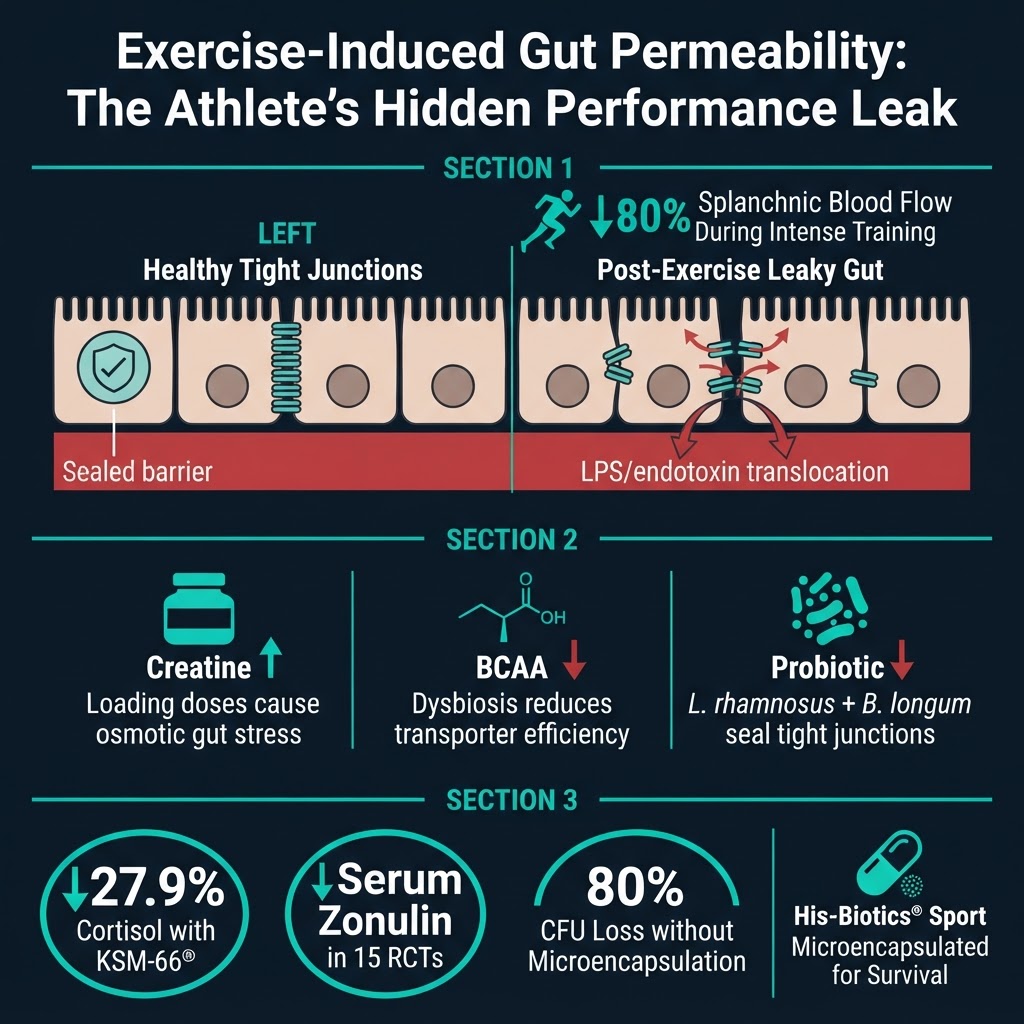
During high-intensity or prolonged exercise, your body undergoes a dramatic redistribution of blood flow. Oxygen and nutrient delivery is prioritised to working muscles, the heart, and the lungs — which means blood is actively shunted away from the splanchnic circulation, the network that supplies your intestines. A 2017 study published in Alimentary Pharmacology & Therapeutics found that splanchnic blood flow can decrease by up to 80% during intense exercise, creating a state of transient intestinal ischaemia. This hypoxic environment triggers the release of tight junction proteins — the molecular locks that keep your intestinal cells sealed together — causing them to loosen and, in some cases, structurally degrade.
What follows is a cascade that athletes rarely connect to their performance. Bacterial endotoxins, primarily lipopolysaccharides (LPS) from gram-negative gut bacteria, leak through the compromised epithelial barrier into systemic circulation. This triggers a low-grade inflammatory response — measurable via elevated plasma LPS and inflammatory cytokines like IL-6 and TNF-α — that directly interferes with testosterone signalling, impairs satellite cell activation (your muscle repair mechanism), and taxes your immune system at precisely the moment it should be recovering. This is not theoretical. A landmark 2020 study in the Journal of the International Society of Sports Nutrition confirmed that endurance athletes showed significantly elevated markers of intestinal permeability and systemic endotoxaemia following a simulated race event, correlating directly with reduced anabolic hormone profiles post-exercise.
The clinical term leaky gut has been somewhat trivialised in wellness culture, but in the context of gut health athletes, it represents a genuine physiological liability. For men specifically, the downstream hormonal effects are particularly significant: LPS-mediated inflammation suppresses Leydig cell function in the testes, directly reducing testosterone synthesis. This is one reason why overtrained male athletes frequently present with subclinical hypogonadism even in the absence of any endocrine pathology. Supporting the gut lining is, in this sense, an act of hormonal defence — and it's why gut microbiome research has become inseparable from elite performance science.
How Creatine and BCAAs Interact with Your Gut Microbiome
Most athletes using creatine and branched-chain amino acids are focused entirely on their anabolic effects — and rightly so. But both compounds have meaningful interactions with the gut that are rarely discussed in product marketing. Understanding these interactions helps you stack smarter and avoid inadvertently worsening the gut permeability problem you're trying to recover from.
Creatine gut health is a nuanced topic. Creatine monohydrate, the most evidence-backed form, is generally well-tolerated, but higher doses — particularly the loading protocols of 20–25g per day — are associated with osmotic stress in the small intestine. This occurs because unabsorbed creatine draws water into the gut lumen, which can disrupt the mucosal environment and, in susceptible individuals, exacerbate intestinal permeability. Importantly, the gut microbiome plays a role in creatine metabolism: certain bacterial species, including Lactobacillus and Bifidobacterium strains, appear to support creatine absorption by maintaining the integrity of the intestinal epithelium through which it is transported. A compromised microbiome may therefore reduce your actual creatine uptake, not just your comfort. Maintenance dosing (3–5g daily) without a loading phase, combined with probiotic support, is the protocol I recommend for most athletes.
BCAAs — leucine, isoleucine, and valine — are similarly dependent on a healthy gut environment for optimal absorption. The transporters responsible for BCAA uptake sit on intestinal epithelial cells; when tight junctions are loose and epithelial integrity is compromised, transporter efficiency drops. Additionally, excessive BCAA supplementation in the context of a disrupted microbiome has been linked in recent research to alterations in tryptophan metabolism — specifically, a shift away from serotonin production and toward the kynurenine pathway, which is pro-inflammatory. This is one of the more counterintuitive findings in sports nutrition: high BCAA intake without a robust gut environment may paradoxically worsen the inflammatory burden that slows your recovery. The concept of BCAA probiotics — pairing amino acid supplementation with targeted probiotic strains — is emerging as a logical and evidence-supported approach to closing this gap.
Key Supplement-Gut Interactions at a Glance
- Creatine monohydrate (loading dose): Can cause osmotic GI stress; paired probiotic support improves mucosal resilience and may enhance absorption efficiency
- BCAAs: Require intact epithelial transporters for optimal uptake; gut dysbiosis reduces transporter density and can shift tryptophan metabolism toward inflammatory pathways
- Whey protein: High intake in a compromised gut increases fermentation of undigested protein in the colon, producing ammonia and hydrogen sulphide — both of which are toxic to epithelial cells
- NSAIDs (ibuprofen etc.): Widely used by athletes for acute pain but directly increase intestinal permeability — a significant concern when the gut is already stressed from training
- Caffeine: Accelerates gastric emptying and alters gut motility; in high doses can reduce mucosal blood flow further compounding exercise-induced permeability
The Science Behind Sports Probiotics for Athletic Recovery
The field of sports probiotics has matured significantly over the past decade. We are no longer talking about generic Lactobacillus acidophilus capsules borrowed from the supermarket shelf. We are talking about strain-specific, mechanistically selected microorganisms that target the precise physiological vulnerabilities of the trained male gut. The published literature now supports several clear mechanisms by which probiotic supplementation benefits athletic performance and recovery — and the evidence is compelling enough that several national sports institutes have incorporated probiotic protocols into their athlete welfare programmes.
A 2021 meta-analysis published in Nutrients examining 15 randomised controlled trials found that probiotic supplementation in athletes significantly reduced upper respiratory tract infections (a key marker of exercise-induced immune suppression), improved gut transit time, and — critically — reduced markers of intestinal permeability including serum LPS and zonulin. Zonulin is a protein that directly regulates tight junction opening; elevated zonulin is considered the most reliable clinical biomarker of leaky gut. The strains showing the greatest effect were Lactobacillus rhamnosus, Lactobacillus plantarum, and Bifidobacterium longum — all of which are included in the His-Biotics® Sport formula at clinically relevant doses.
Exercise recovery probiotics work through several synergistic pathways. First, they upregulate the production of short-chain fatty acids (SCFAs) — particularly butyrate — which serve as the primary fuel source for colonocytes (intestinal lining cells) and directly stimulate tight junction protein expression. Second, they compete with pathogenic bacteria for adhesion sites on the intestinal epithelium, reducing the bacterial load available to translocate during exercise-induced permeability windows. Third, specific strains modulate the mucosal immune system by promoting regulatory T-cell activity and reducing the pro-inflammatory cytokine milieu that follows intense training. This is precisely the anti-inflammatory environment that allows testosterone signalling to recover, protein synthesis to proceed, and muscle damage to resolve efficiently. You can explore the full rationale behind our formulation when you explore our athlete formula.
Why Delivery Technology Matters as Much as Strain Selection
One of the most overlooked variables in probiotic efficacy is survival rate — specifically, what percentage of live bacteria actually reach the large intestine where they exert their effects. Most standard probiotic capsules lose 60–90% of their viable colony-forming units (CFUs) during transit through the acidic stomach environment. This is not a minor inefficiency; it fundamentally undermines the dose-response relationship. At His-Biotics® and Velobiotics™, we address this through our proprietary microencapsulation technology, which coats each bacterial cell in a pH-resistant lipid matrix, protecting viability through gastric acid exposure and ensuring that the stated CFU count on the label reflects what actually arrives at the intestinal mucosa. In a category where most products are trading in marketing rather than mechanism, this is a non-negotiable standard.
Ashwagandha, Cortisol, and the Gut-Hormone Axis
No discussion of athletic gut health in men is complete without addressing the cortisol-gut connection. Chronic training stress elevates cortisol — this is well understood — but what's less appreciated is that cortisol directly increases intestinal permeability by disrupting tight junction protein expression and reducing mucosal blood flow. The gut and the HPA axis are in constant bidirectional communication: a stressed gut signals the brain to produce more cortisol, and more cortisol further damages the gut. For the serious athlete, this feedback loop can become a significant obstacle to both recovery and hormonal health.
This is why His-Biotics® Sport includes KSM-66® Ashwagandha, the most clinically studied form of this adaptogenic root. Clinical studies on KSM-66® Ashwagandha have demonstrated reductions in serum cortisol of up to 27.9% in chronically stressed individuals, alongside significant improvements in testosterone levels and subjective measures of recovery quality. By dampening the cortisol-mediated contribution to gut permeability, ashwagandha acts as a systemic complement to the direct epithelial repair work being done by the probiotic strains — it addresses the upstream hormonal driver of the very problem the bacteria are trying to fix at the mucosal level. The synergy here is intentional and mechanistically coherent, not coincidental co-formulation.
For men who want to take a more structured approach to managing the cortisol-gut-testosterone triangle across their full day — not just around training — I'd recommend reviewing the Morning Man Protocol, which integrates gut support, hormonal priming, and adaptogenic supplementation into a daily rhythm that complements the sport-specific stack. The emerging PubMed research on probiotics and testosterone is increasingly validating what we see clinically: a healthy gut is a prerequisite for healthy male hormonal function, and this relationship is especially pronounced in men under the physiological stress of regular intense training.
Key Takeaways
- Exercise-induced gut permeability is real and measurable: Intense training reduces splanchnic blood flow by up to 80%, loosening tight junctions and allowing bacterial endotoxins to enter systemic circulation — triggering inflammation that suppresses testosterone and slows recovery
- Creatine and BCAAs perform better in a healthy gut: Both compounds rely on intact intestinal epithelium for optimal absorption; dysbiosis reduces transporter efficiency and can shift amino acid metabolism toward pro-inflammatory pathways
- Strain-specific sports probiotics reduce leaky gut markers: Evidence-backed strains including L. rhamnosus, L. plantarum, and B. longum reduce serum zonulin and LPS, improve immune resilience, and support the anti-inflammatory environment needed for muscle repair
- Delivery technology determines efficacy: Without microencapsulation, the majority of probiotic CFUs are destroyed in the stomach before reaching the gut — making survival technology a clinical necessity, not a marketing add-on
- Cortisol and gut health are inseparable for male athletes: KSM-66® Ashwagandha's cortisol-lowering effects directly reduce a key upstream driver of intestinal permeability, complementing the direct mucosal repair work of probiotic strains
- Gut health is hormonal health in men: LPS-mediated inflammation suppresses Leydig cell function and testosterone synthesis — protecting the gut lining is an act of hormonal defence, not just digestive comfort
If you're training hard and want your supplement stack to actually work — if you want your creatine absorbed, your BCAAs utilised, your recovery accelerated, and your testosterone protected — the gut is where you start. His-Biotics® Sport was built specifically for this purpose: a clinically formulated, microencapsulated sports probiotic designed for the physiological demands of the serious male athlete. Take the Total Gut Score quiz on our site to identify your specific gut-performance gaps, or go directly to the product page to review the full formula and the evidence behind every ingredient. Your gut is not a footnote in your performance story. It's the opening chapter.
— Dr. Chomba Chuma, MD & Founder, His-Biotics® by Velobiotics™